Mrigesh Vikram Inamdar is an Indian interdisciplinary artist based in London. He holds a BA in Photography from ACFM College in Telangana, India, and an MA in Photography from Kingston School of Arts, UK.
His early work features a surreal interpretation of urban nature reserves being rewilded, focusing on the reintroduction of animals, birds, and habitats. Based at Tolworth Court Farm Fields in the UK, the project envisions a future where declining species are restored to their natural habitats. A modern take on the Wild Tolworth rewilding initiative by the Citizen Zoo Conservation Organization, it aims to raise awareness of urban rehabilitation and habitat preservation. Through a mix of photographs and AI-generated images, Inamdar creates a sense of hope for nature’s return to urban spaces, evoking emotional responses and highlighting the importance of preserving natural habitats.
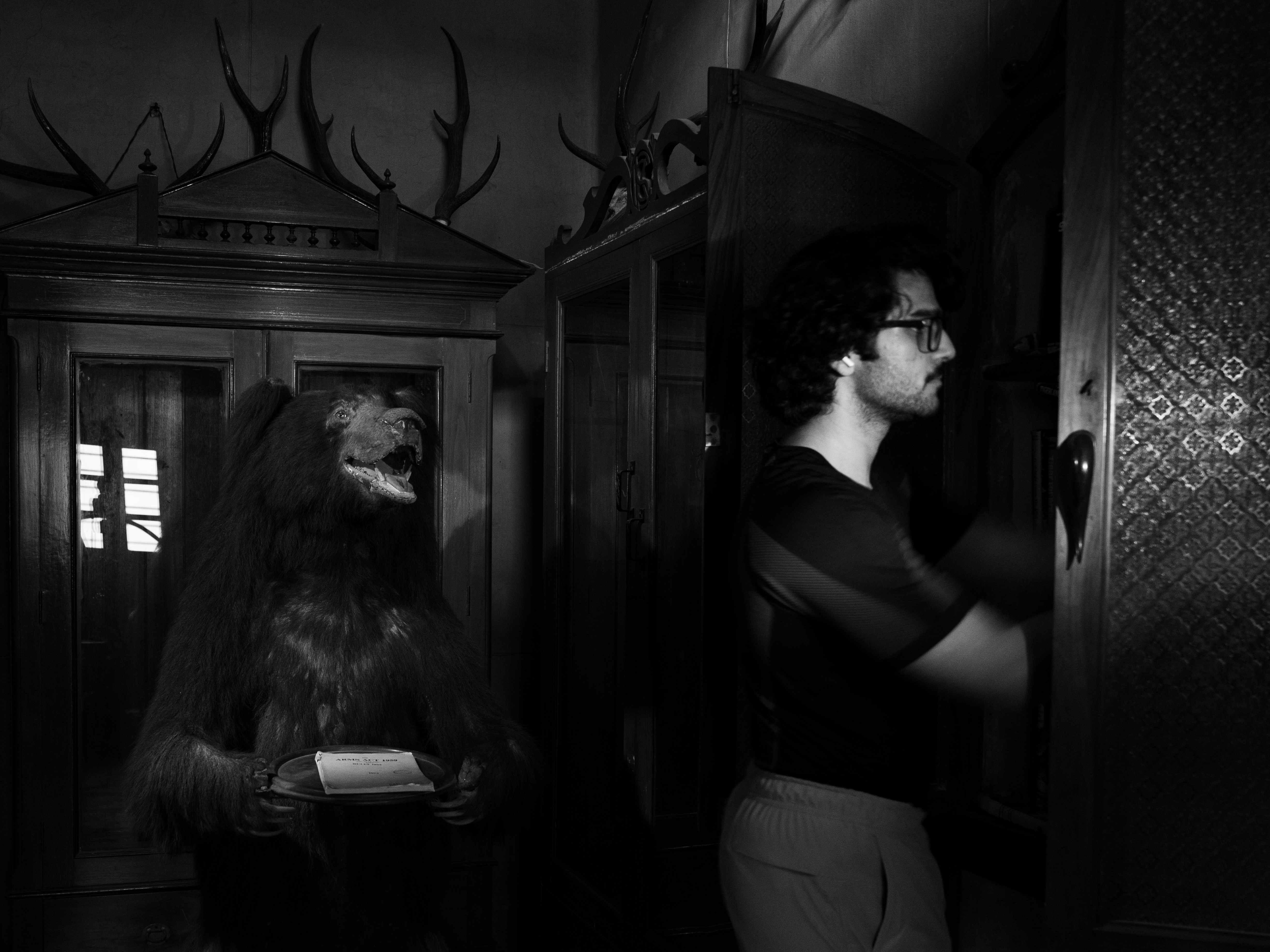
His recent practice blends documentary and experimental styles to examine the complex relationship between British colonialism in India and contemporary conservation efforts. The body of work, The Temporal Archives of Imperial Sport in Central India, is an examination of historical materials and field research, where Mrigesh engages with archival documents, books, and photographs to explore the narratives and histories that highlight the impact of British colonialism on current conservation practices and contemporary approaches to nature and its preservation. Focused on wildlife and conservation, Inamdar’s work delves into the colonial legacies that have shaped current structures of environmental preservation, offering a critical lens on the politics of conservation. One of his key photographic projects features archival photographs that are colorized in a unique way, inspired by the colour vision of tigers, to create a temporal vision of a “trophy” concept. This visual approach reflects the historical legacy of trophy hunting, specifically examining the methods used, such as the “Machan” — a platform or scaffolding built on trees to gain a high-ground advantage during hunts.
The concept of the Machan still exists today, though its purpose has shifted from animal hunting to wildlife observation for conservation efforts, including wildlife censuses. Inamdar’s work critically explores this shift, highlighting the ongoing influence of colonial hunting practices on current conservation measures. Alongside his photography, Inamdar integrates audio storytelling to capture the experience of a sportsman during a hunting expedition, focusing on nature’s response to the predator-prey dynamic. This multi-disciplinary approach deepens the exploration of historical and contemporary conservation practices, offering a complex perspective on wildlife protection.
 Mrigesh V Inamdar