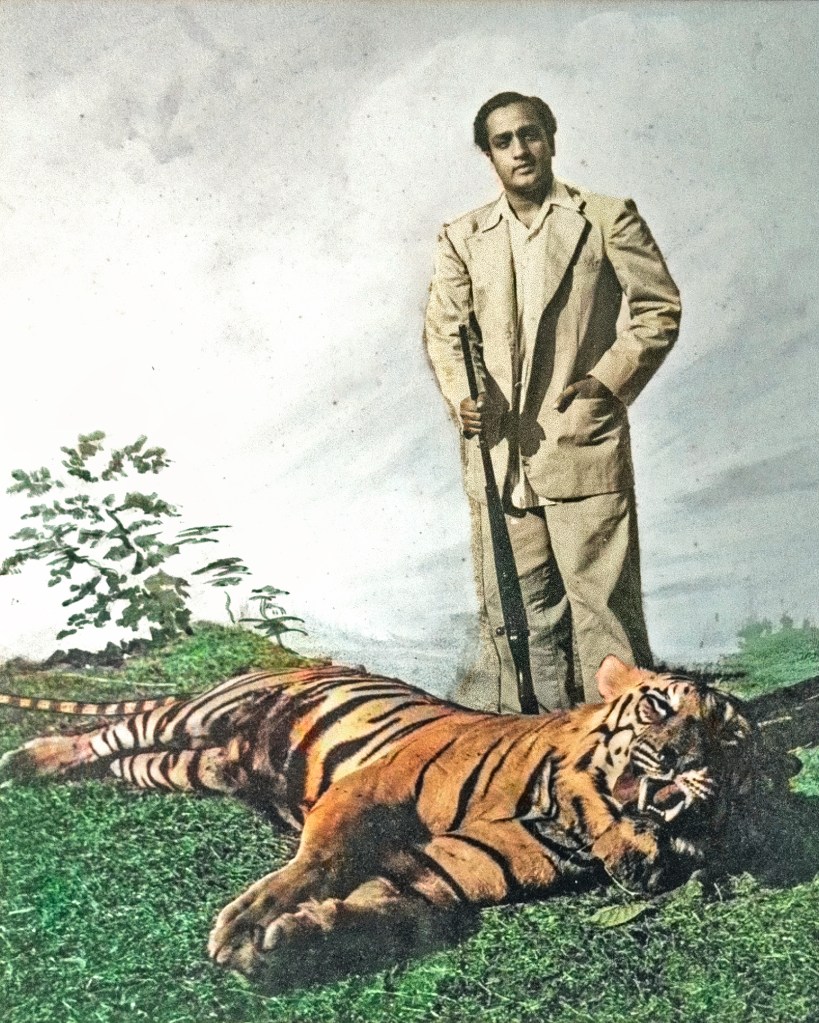
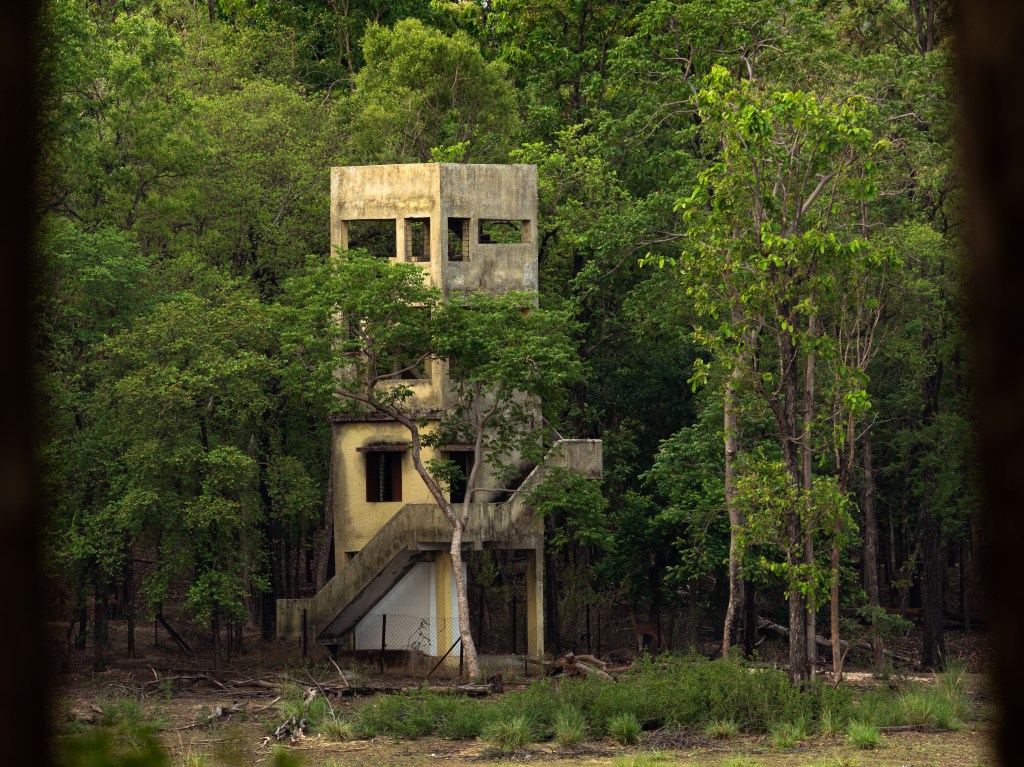
The field of wildlife in India has a vast resource of colonial history embedded in it, which changed its natural development and left its mark on the conservational structure. Displacement of indigenous groups of people and using them as a tool for the imperial sport of hunting in their own forests occurred. Hunting as a sport existed much before British colonial involvement in India, but the idea of depleting nature’s resources and creating a disparity between the different communities of people based on class, religion, and gender created a rigid caste-based system just for their own benefit. The colonial presence in the past and its influences in the field of wildlife are explored in my body of work, Sportsman’s Diorama, through an interdisciplinary approach by working with personal archival documents, books, photographs, and artifacts from Shankarrao Krishnarao Chitnavis’s collection, which was involved in the legal sport of hunting during the post-colonial period. The archival photographs are colorized in a particular aspect based on the tiger’s eye color vision to create a temporal vision of a dead “trophy” visual concept. The body of work focuses on the relationship between imperial history and present conservation measures by exploring and photographically documenting one of the methods of hunting, which is to build a structure on a tree to have a high ground advantage over the animal, and that structure is called “Machan” (a Hindi word for a platform or scaffolding on a tree for hunting). This concept of “Machan” still exists, but the purpose has shifted from an animal hunting platform to a wildlife observation structure, which is used for conservation purposes (wildlife censuses). In addition to the photographic medium, my work also explores the intricacies of a sportsman’s experience during a hunting expedition through audio storytelling, capturing nature’s response in the presence of a predator and prey. Finally, Mrigesh’s work examines the colonial legacy in India’s wildlife conservation techniques, focusing on the past exploitation of the environment and indigenous communities for imperial sport. The project uses an interdisciplinary method that combines archival research, photography, and audio storytelling to chart the evolution of hunting tools, including the “Machan”, from instruments of power to platforms for conservation. The project highlights the intricate relationship between past imperialism and contemporary conservation efforts, providing a nuanced view of colonialism’s impact on India’s natural heritage.

Temporal Prespective of Trophy.

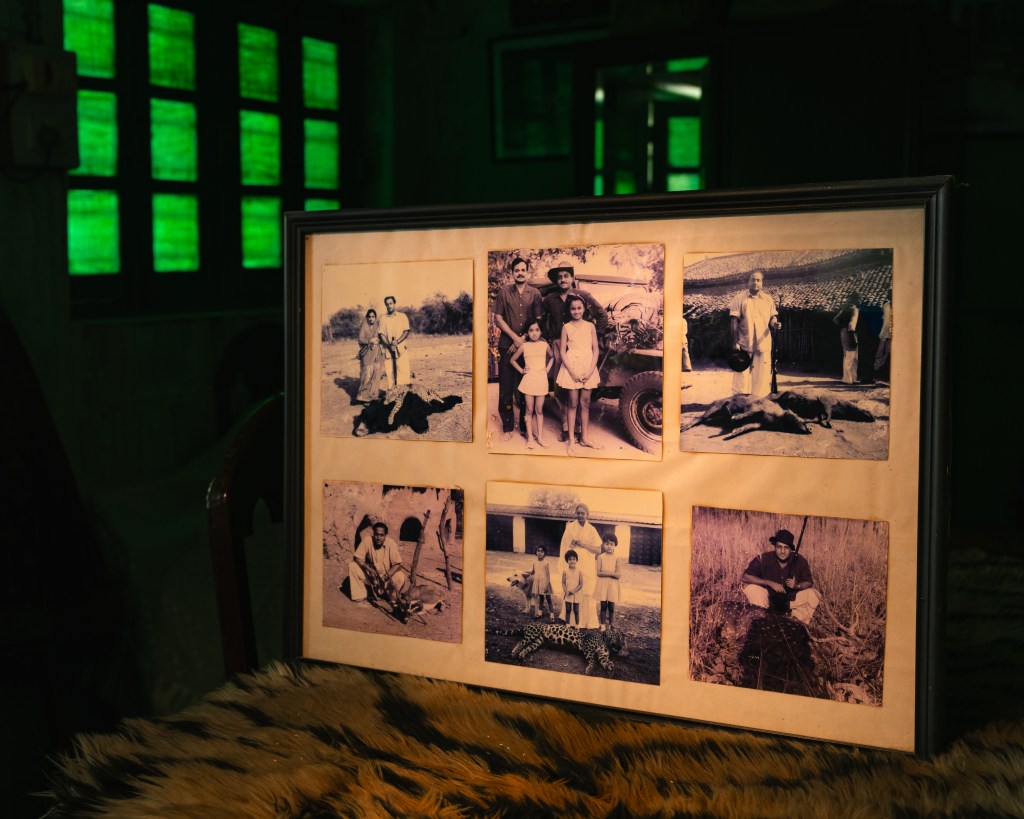
“Raw Materials”.

Van Ingen & Van Ingen Pamphlet, Artists of Taxidermy, Mysore, India, 1948. 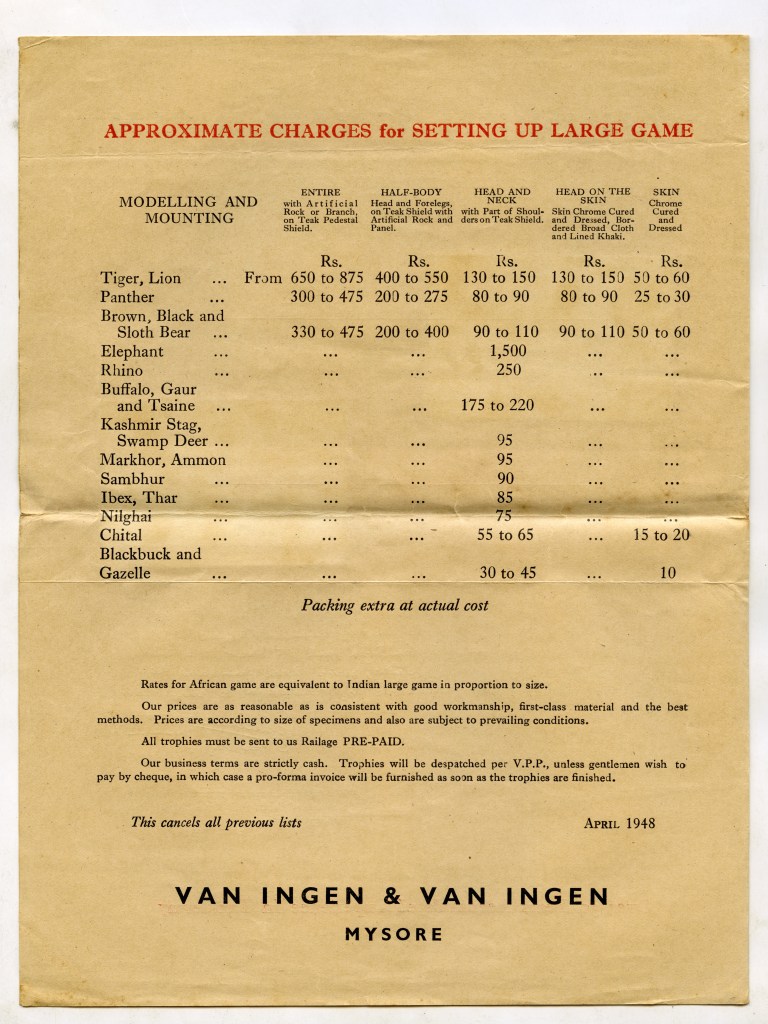
Page 2, Van Ingen & Van Ingen Pamphlet, Artists of Taxidermy, Mysore, India, 1948. 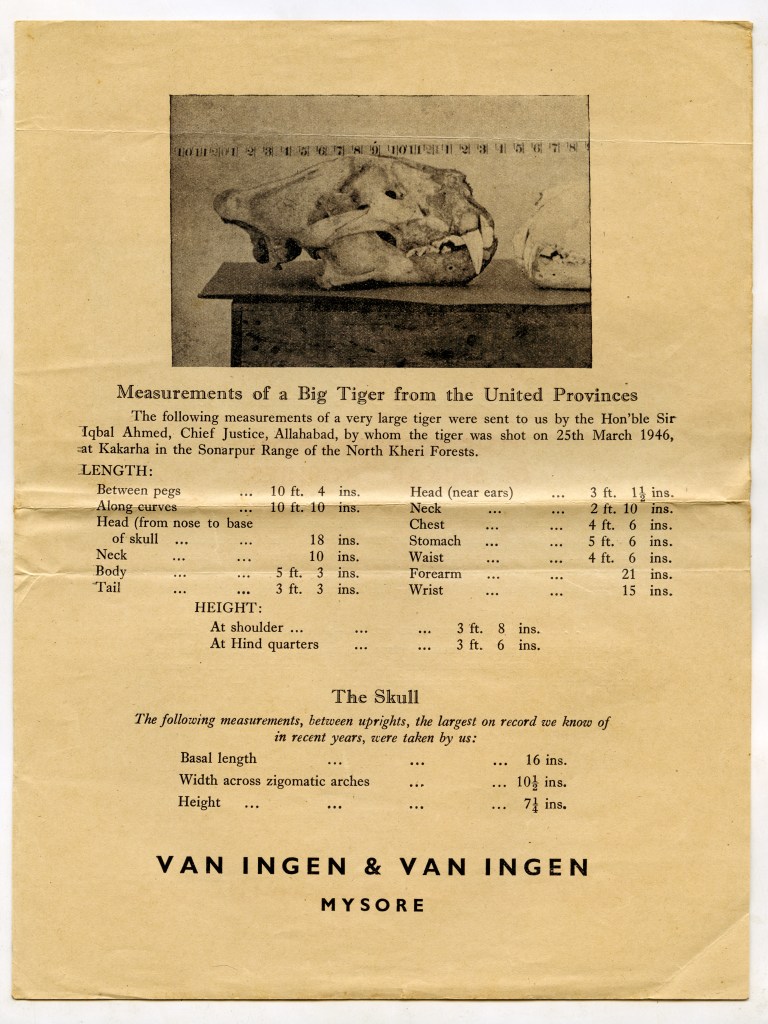
Page 3, Van Ingen & Van Ingen Pamphlet, Artists of Taxidermy, Mysore, India, 1948. 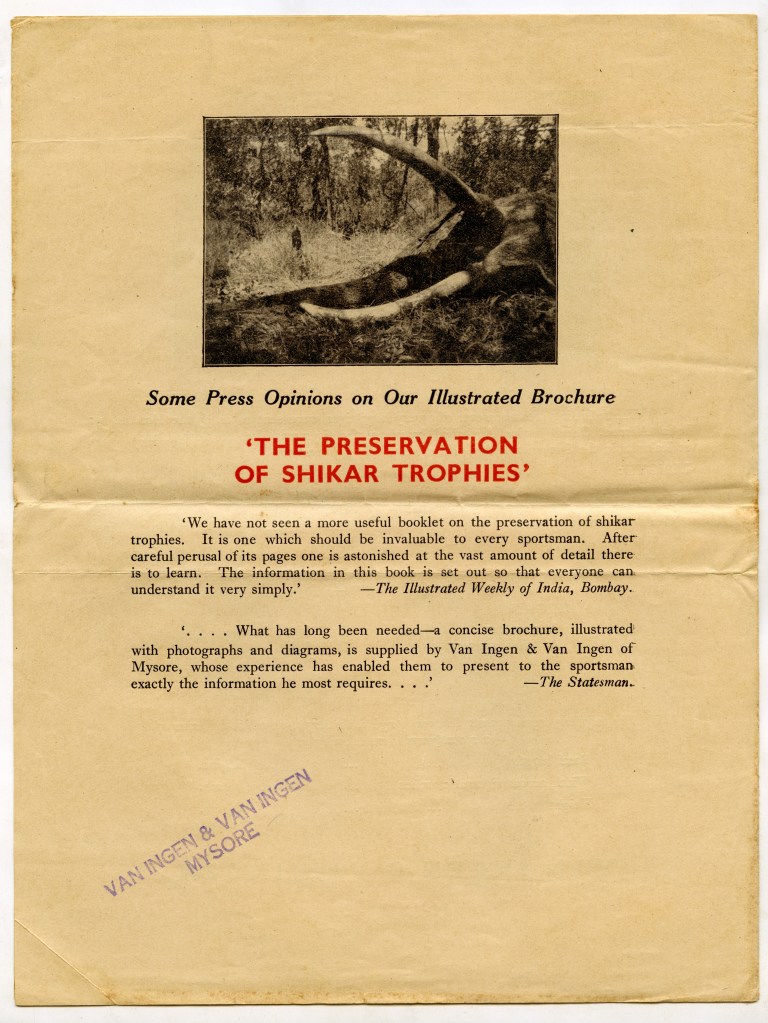
Last page, Van Ingen & Van Ingen Pamphlet, Artists of Taxidermy, Mysore, India, 1948. 
The Preservation of Shikar Trophies, Van Ingen and Van Ingen, Artist of Taxidermy, Mysore, India, booklet, 1951. 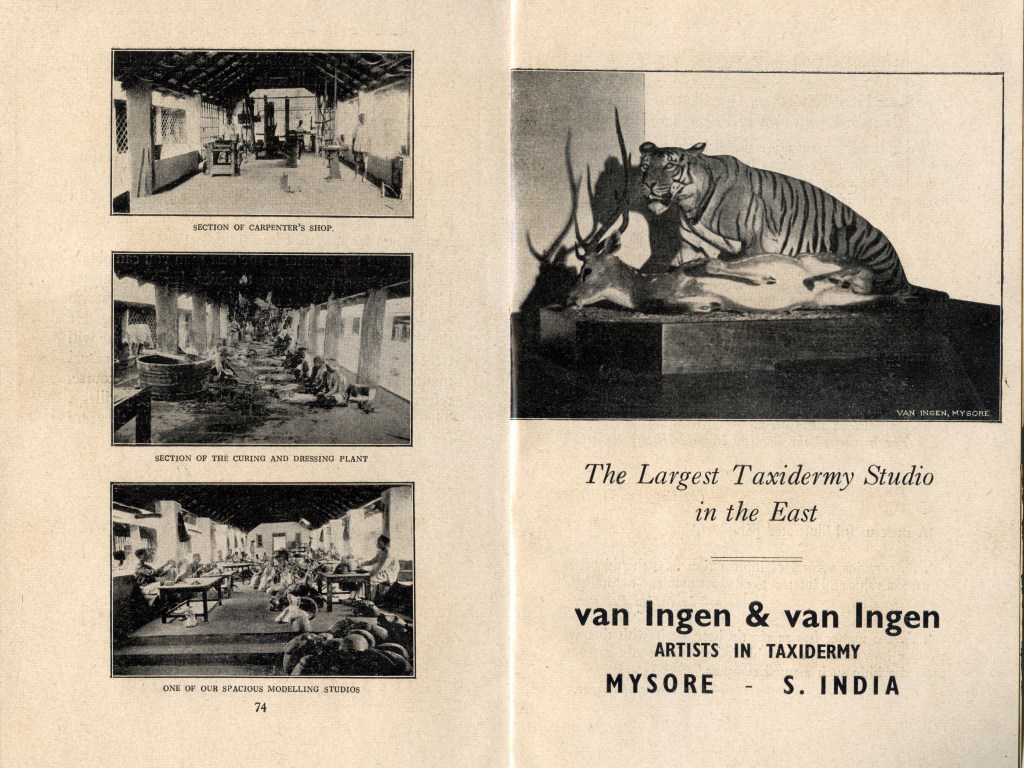
Last pages, The Preservation of Shikar Trophies, Van Ingen and Van Ingen, Artist of Taxidermy, Mysore, India, booklet, 1951. 
Practical Skinning and Curing (Illustrated), Taxidermist, Nagpur Charma Karyalya, Tilak Road, Nagpur-2, June 1951. 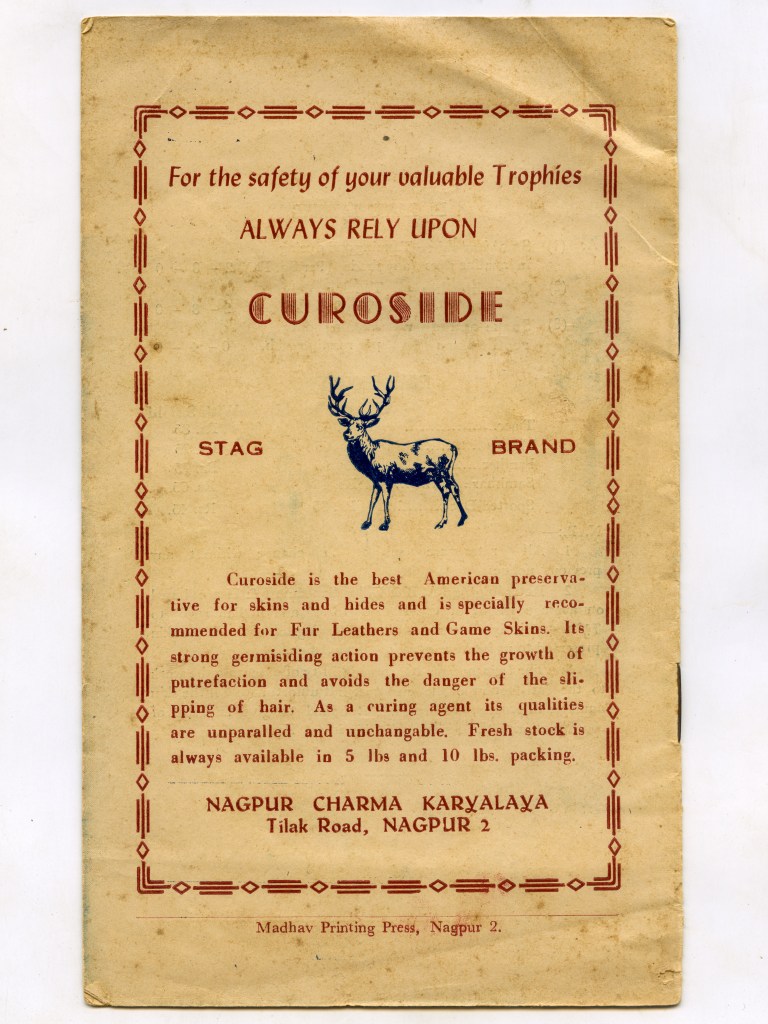
Practical Skinning and Curing (Illustrated), Taxidermist, Nagpur Charma Karyalya, Tilak Road, Nagpur-2, June 1951. 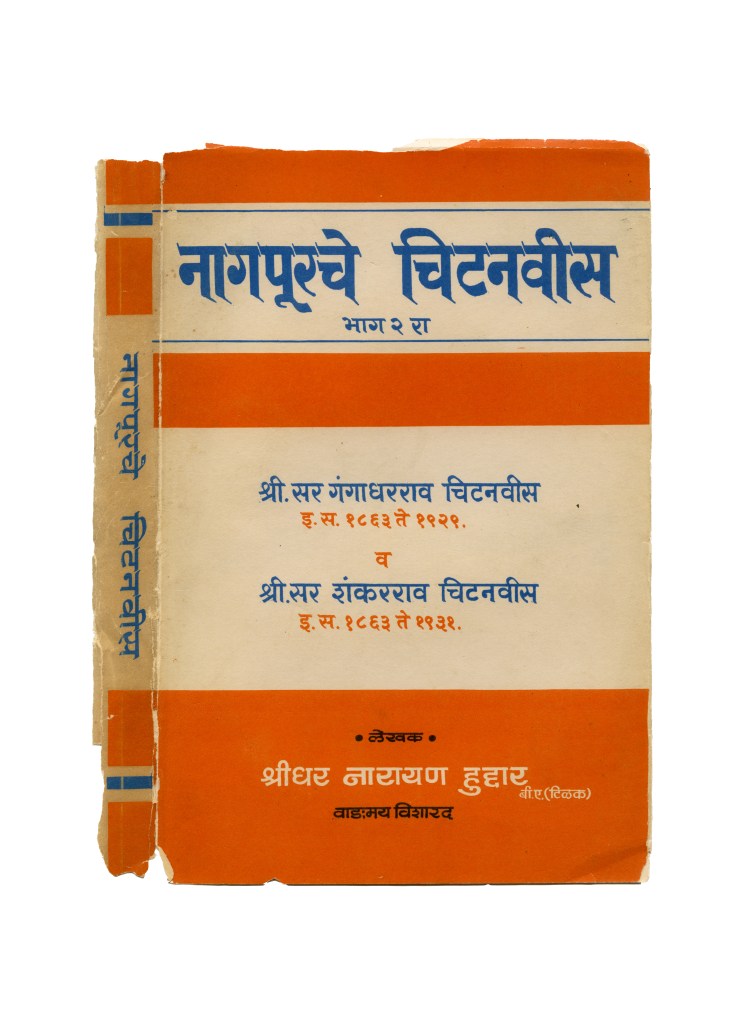
Chitnavis of Nagpur Part 2, Shri. Sri Gangadharrao Chitnavis, Shri. Sri Shankarao Chitnavis, 1868 to, Author is Shridhar Narayana Huddhar. 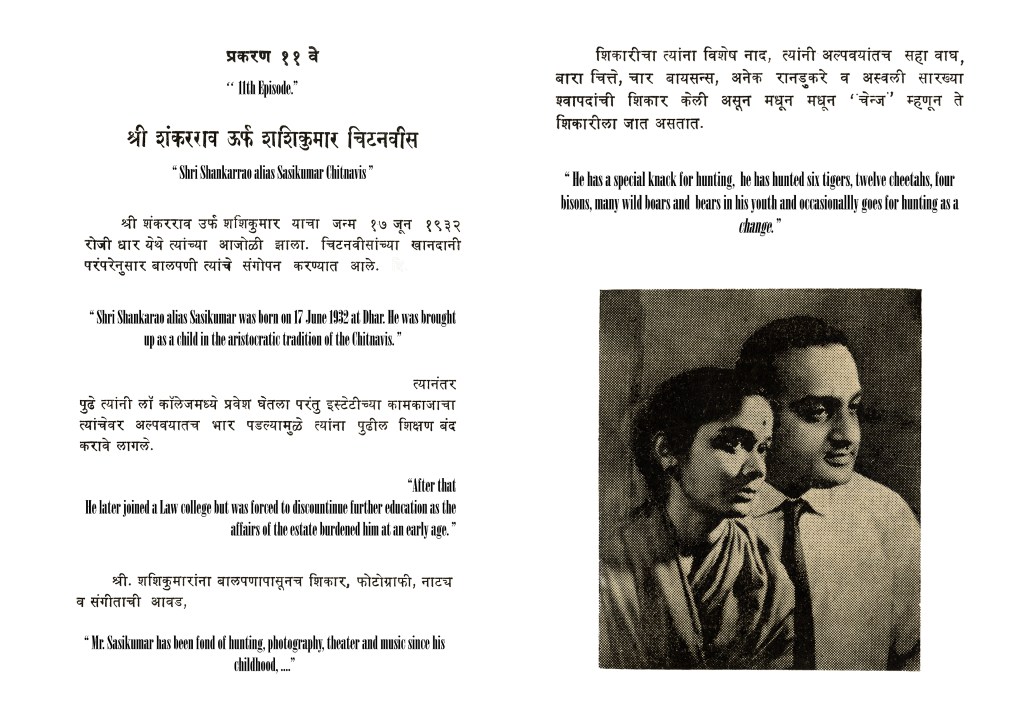
Chitnavis of Nagpur Part 2, Shri. Sri Gangadharrao Chitnavis, Shri. Sri Shankarao Chitnavis, 1868 to, Author is Shridhar Narayana Huddhar. 
Organized Text Chitnavis family. 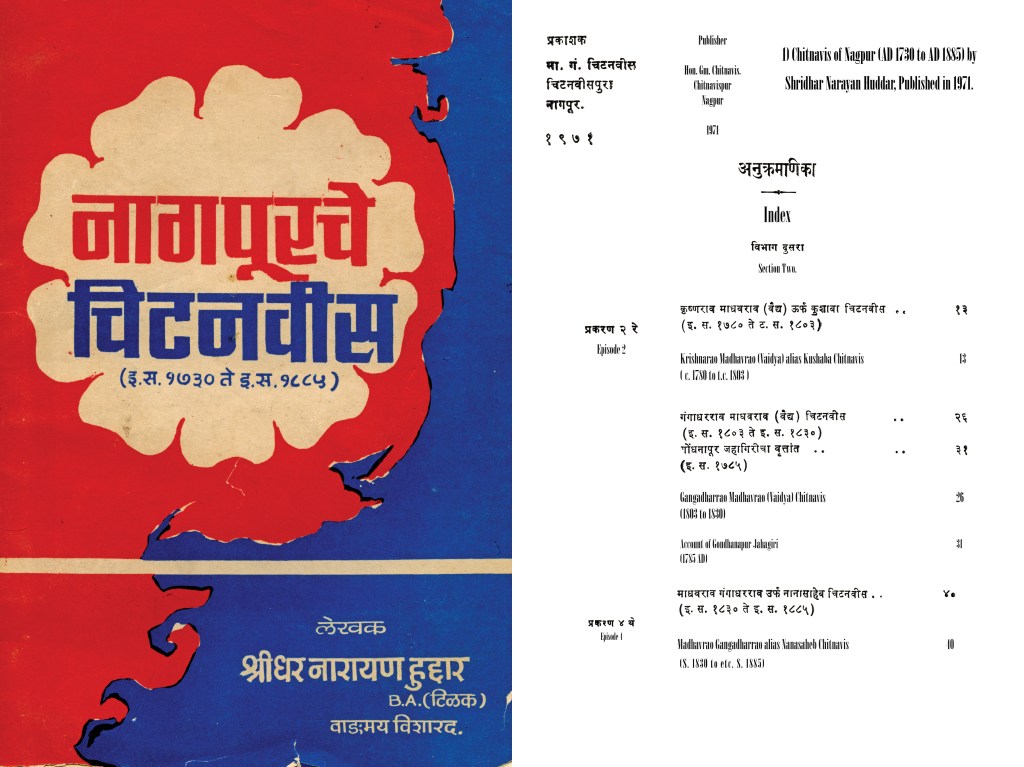
Chitnavis of Nagpur (AD 1730 to AD 1885) by Shridhar Narayan Huddar, Published in 1971. 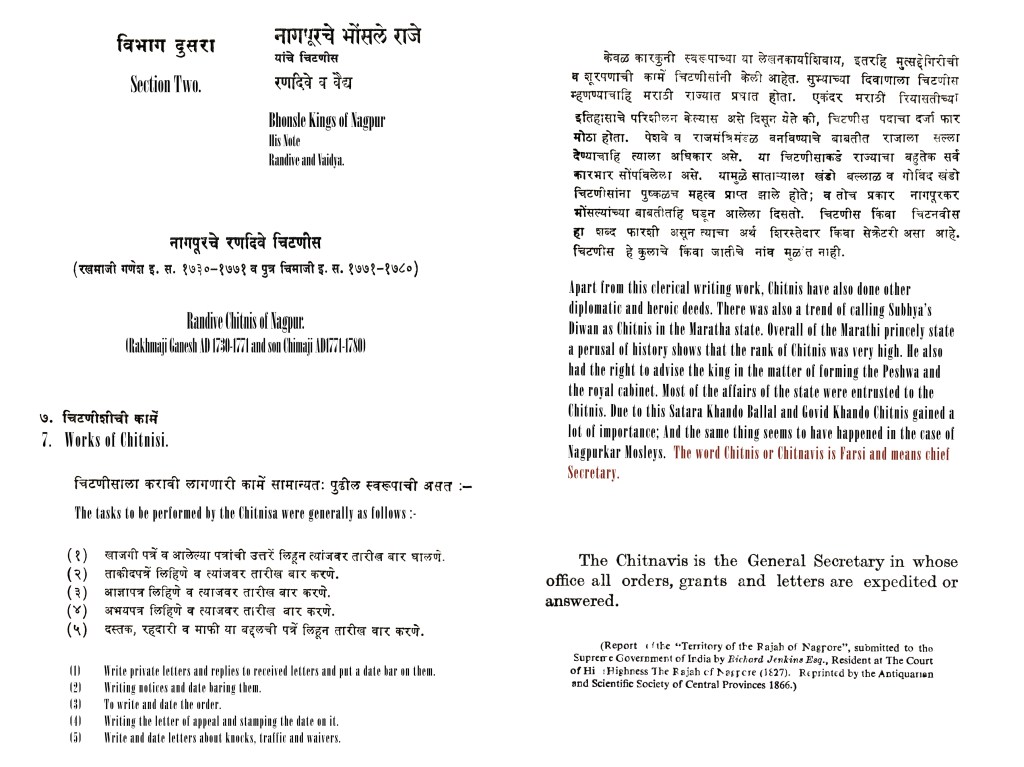
Chitnavis of Nagpur (AD 1730 to AD 1885) by Shridhar Narayan Huddar, Published in 1971. 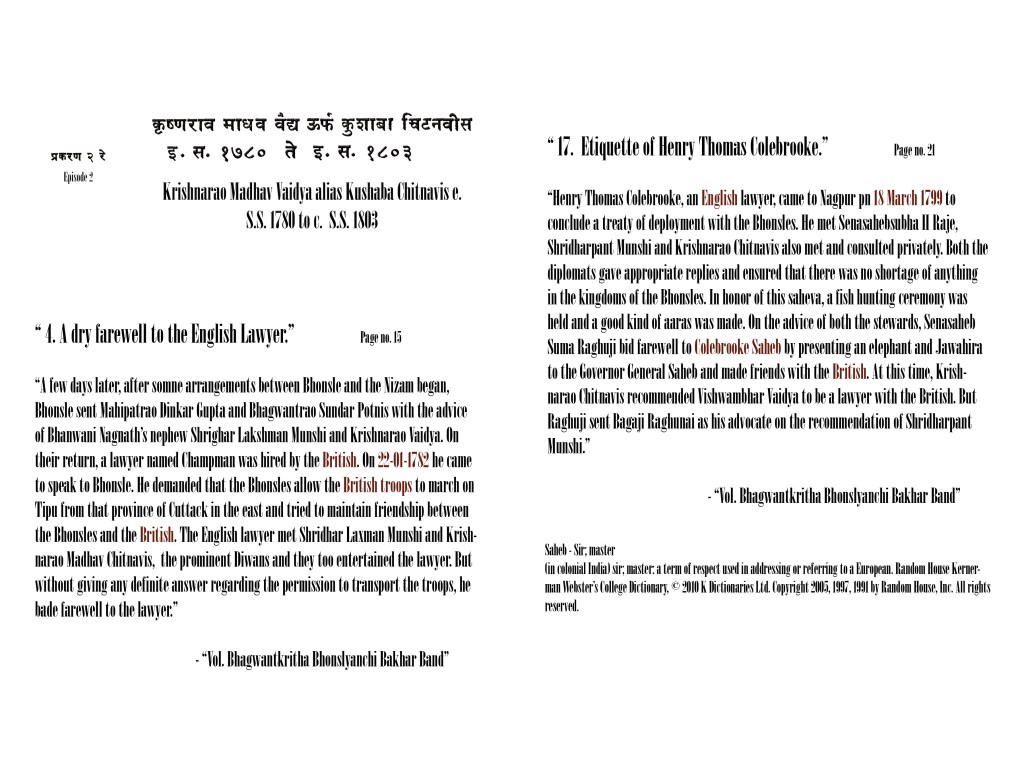
Chitnavis of Nagpur (AD 1730 to AD 1885) by Shridhar Narayan Huddar, Published in 1971. 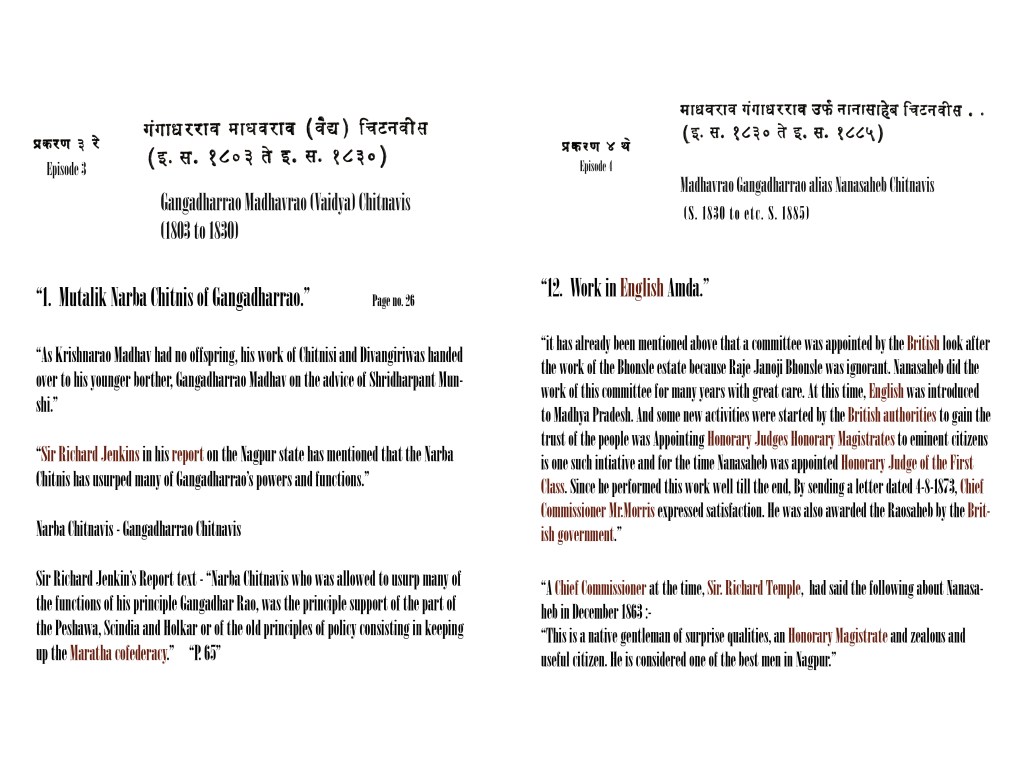
Chitnavis of Nagpur (AD 1730 to AD 1885) by Shridhar Narayan Huddar, Published in 1971. 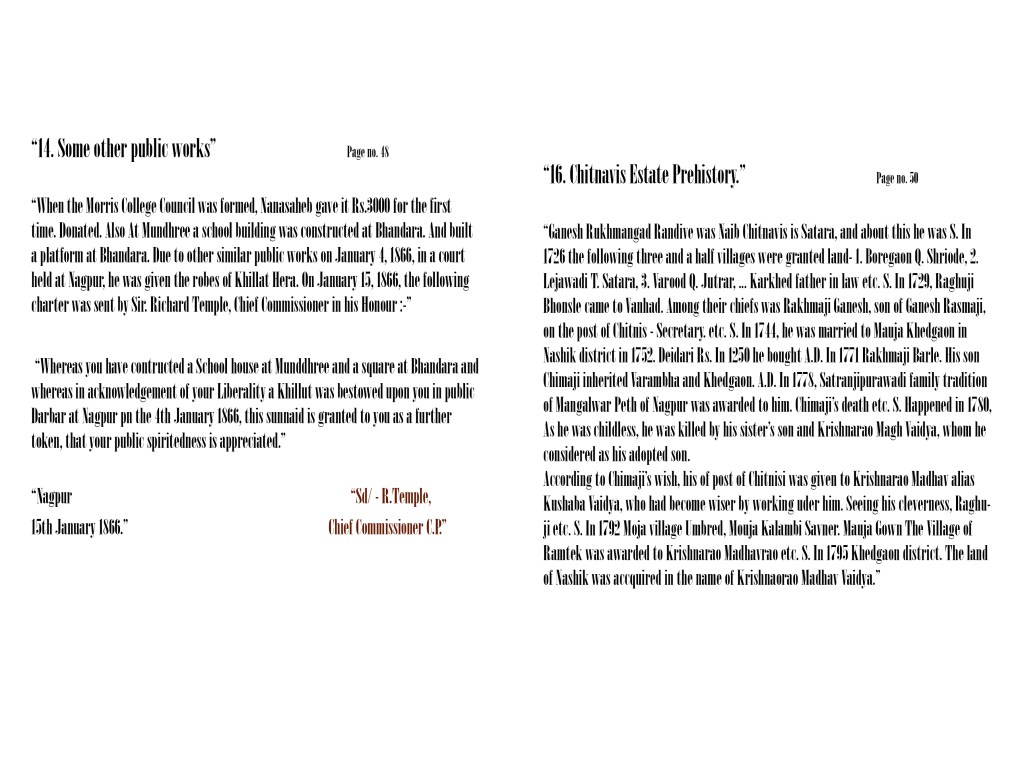
Chitnavis of Nagpur (AD 1730 to AD 1885) by Shridhar Narayan Huddar, Published in 1971. 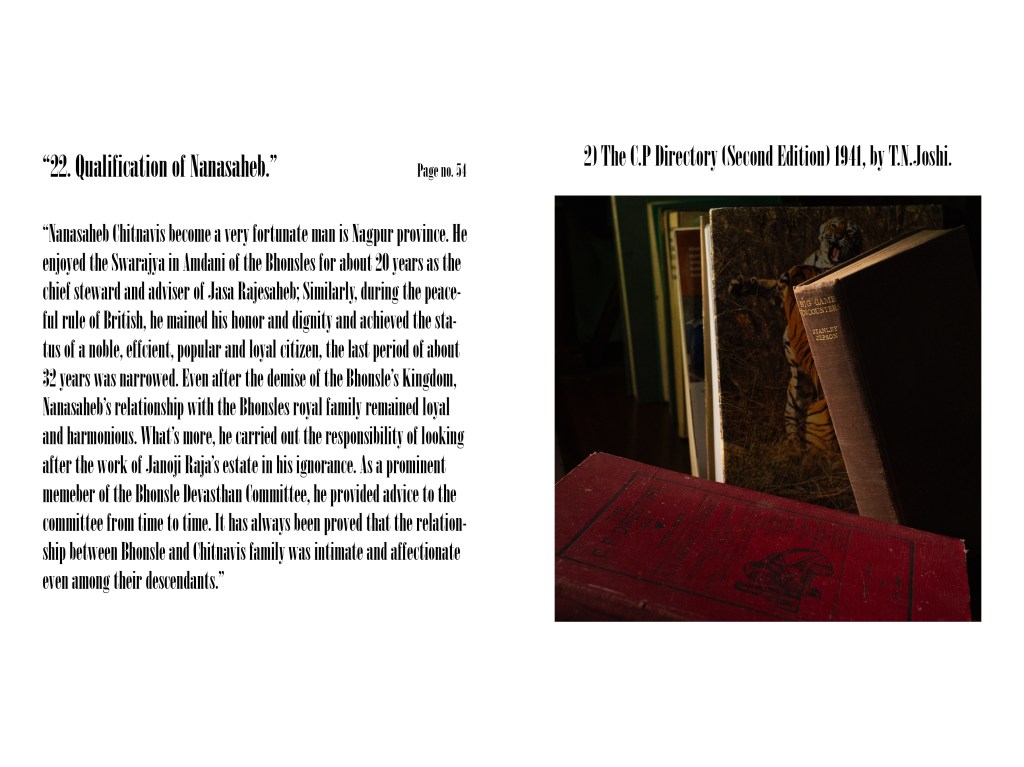
Chitnavis of Nagpur (AD 1730 to AD 1885) by Shridhar Narayan Huddar, Published in 1971 & The C.P Directory (Second Edition) 1941, T.N.Joshi. 
The C.P Directory (Second Edition) 1941, T.N.Joshi. 
The C.P Directory (Second Edition) 1941, T.N.Joshi. 
Big Game Encounters : Critical Moments In The Lives Of Well-known Shikaris, Edited by Stanley Jepson, Foreworded by Colonel A.I,R. Glasfurd, C.M.G., D.S.O, 1937, H.F. & G. Witherby, London. 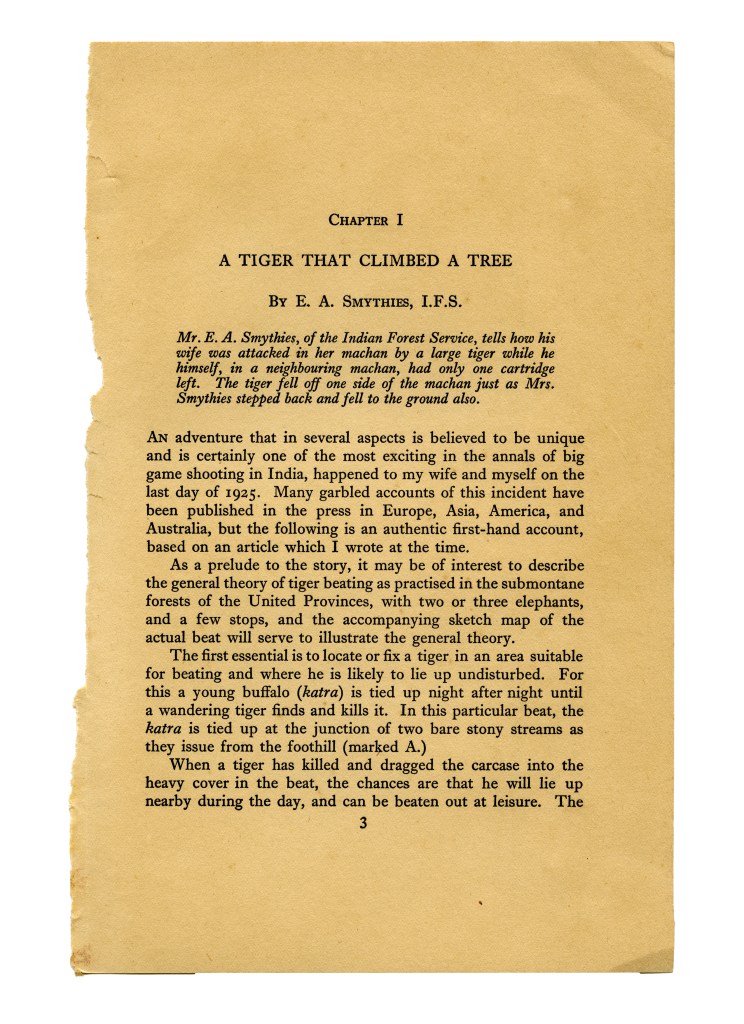
Chapter-1, Big Game Encounters : Critical Moments In The Lives Of Well-known Shikaris, Edited by Stanley Jepson, Foreworded by Colonel A.I,R. Glasfurd, C.M.G., D.S.O, 1937, H.F. & G. Witherby, London. 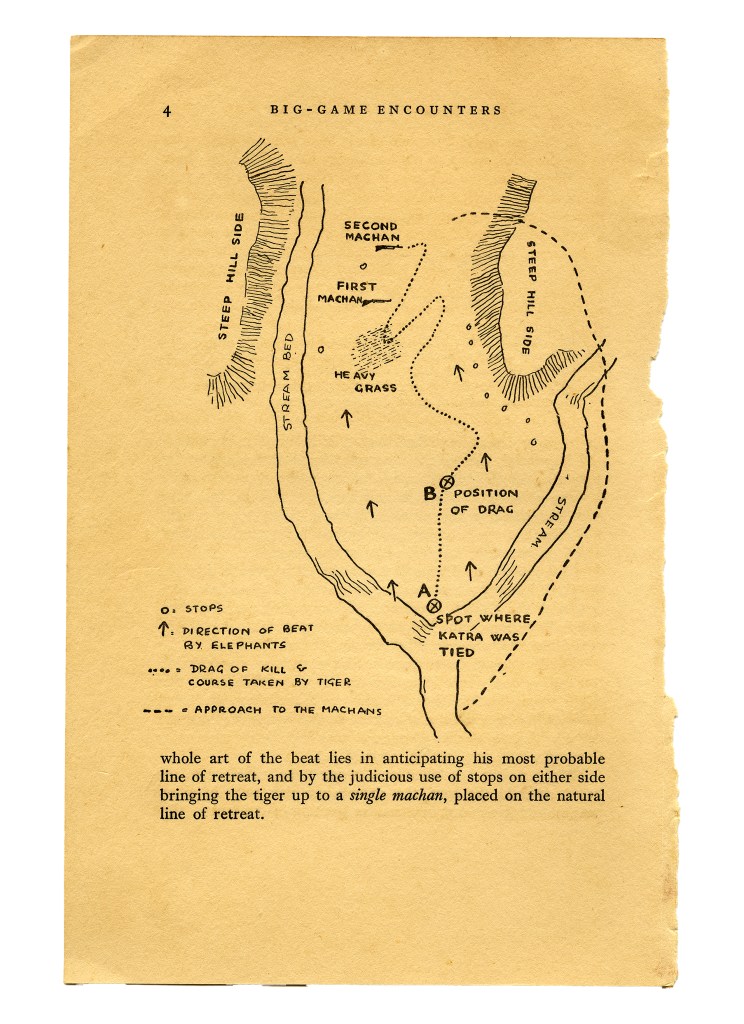
Chapter-1, Big Game Encounters : Critical Moments In The Lives Of Well-known Shikaris, Edited by Stanley Jepson, Foreworded by Colonel A.I,R. Glasfurd, C.M.G., D.S.O, 1937, H.F. & G. Witherby, London. 
Chapter-3, Big Game Encounters : Critical Moments In The Lives Of Well-known Shikaris, Edited by Stanley Jepson, Foreworded by Colonel A.I,R. Glasfurd, C.M.G., D.S.O, 1937, H.F. & G. Witherby, London. 
Chapter-3, Big Game Encounters : Critical Moments In The Lives Of Well-known Shikaris, Edited by Stanley Jepson, Foreworded by Colonel A.I,R. Glasfurd, C.M.G., D.S.O, 1937, H.F. & G. Witherby, London. 
Big Game Encounters : Critical Moments In The Lives Of Well-known Shikaris, Edited by Stanley Jepson, Foreworded by Colonel A.I,R. Glasfurd, C.M.G., D.S.O, 1937, H.F. & G. Witherby, London. 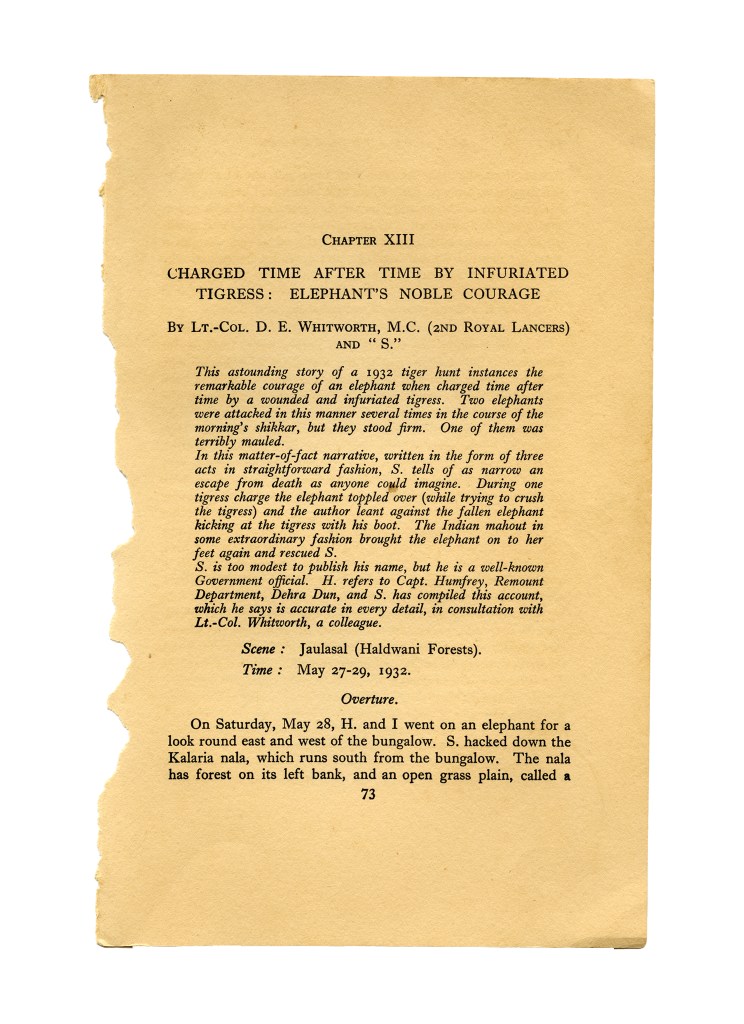
Chapter-13, Big Game Encounters : Critical Moments In The Lives Of Well-known Shikaris, Edited by Stanley Jepson, Foreworded by Colonel A.I,R. Glasfurd, C.M.G., D.S.O, 1937, H.F. & G. Witherby, London. 
Chapter-13, Big Game Encounters : Critical Moments In The Lives Of Well-known Shikaris, Edited by Stanley Jepson, Foreworded by Colonel A.I,R. Glasfurd, C.M.G., D.S.O, 1937, H.F. & G. Witherby, London. 
Chapter-13, Big Game Encounters : Critical Moments In The Lives Of Well-known Shikaris, Edited by Stanley Jepson, Foreworded by Colonel A.I,R. Glasfurd, C.M.G., D.S.O, 1937, H.F. & G. Witherby, London. 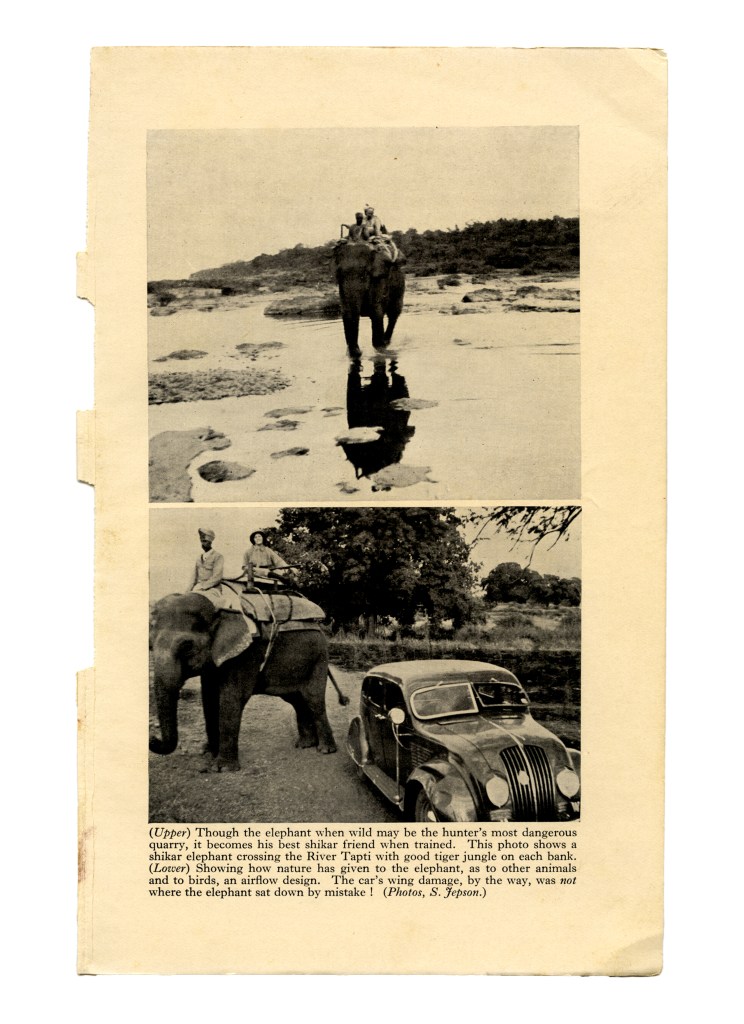
Big Game Encounters : Critical Moments In The Lives Of Well-known Shikaris, Edited by Stanley Jepson, Foreworded by Colonel A.I,R. Glasfurd, C.M.G., D.S.O, 1937, H.F. & G. Witherby, London. 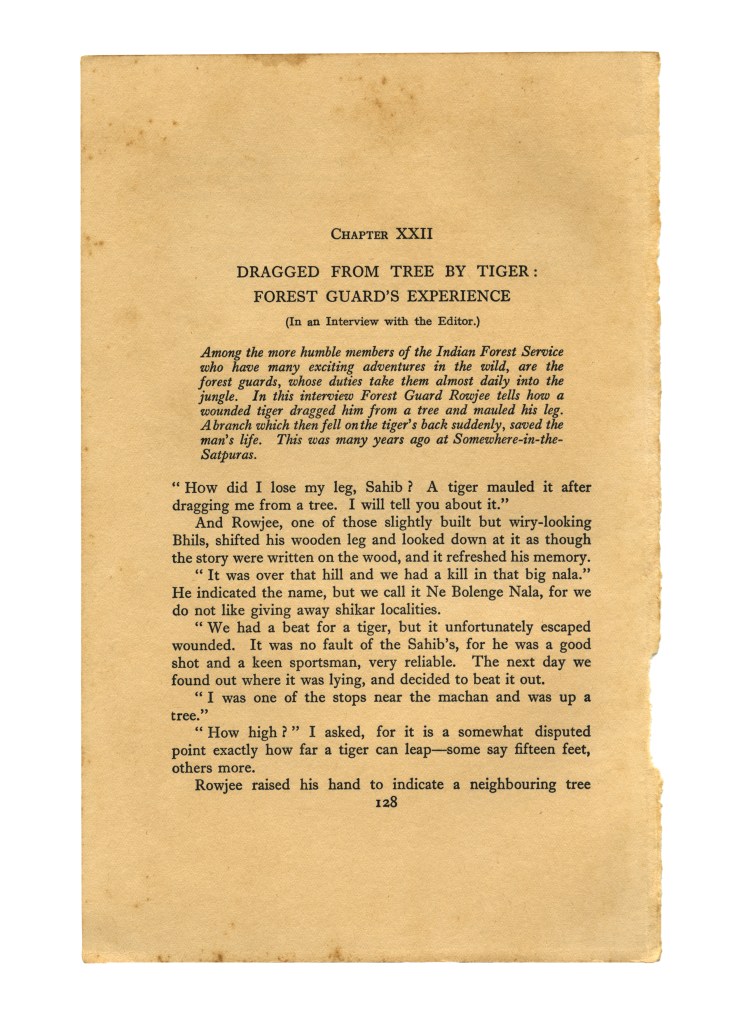
Chapter-22, Big Game Encounters : Critical Moments In The Lives Of Well-known Shikaris, Edited by Stanley Jepson, Foreworded by Colonel A.I,R. Glasfurd, C.M.G., D.S.O, 1937, H.F. & G. Witherby, London. 
Chapter-22, Big Game Encounters : Critical Moments In The Lives Of Well-known Shikaris, Edited by Stanley Jepson, Foreworded by Colonel A.I,R. Glasfurd, C.M.G., D.S.O, 1937, H.F. & G. Witherby, London. 
Chapter-25, Big Game Encounters : Critical Moments In The Lives Of Well-known Shikaris, Edited by Stanley Jepson, Foreworded by Colonel A.I,R. Glasfurd, C.M.G., D.S.O, 1937, H.F. & G. Witherby, London. 
Chapter-25, Big Game Encounters : Critical Moments In The Lives Of Well-known Shikaris, Edited by Stanley Jepson, Foreworded by Colonel A.I,R. Glasfurd, C.M.G., D.S.O, 1937, H.F. & G. Witherby, London. 
The Sportsman’s Handbook to Practical Collecting and Preserving Trophies by Rowland Ward, F.Z.S, Leather Hardcover, 7th Edition, 1894. 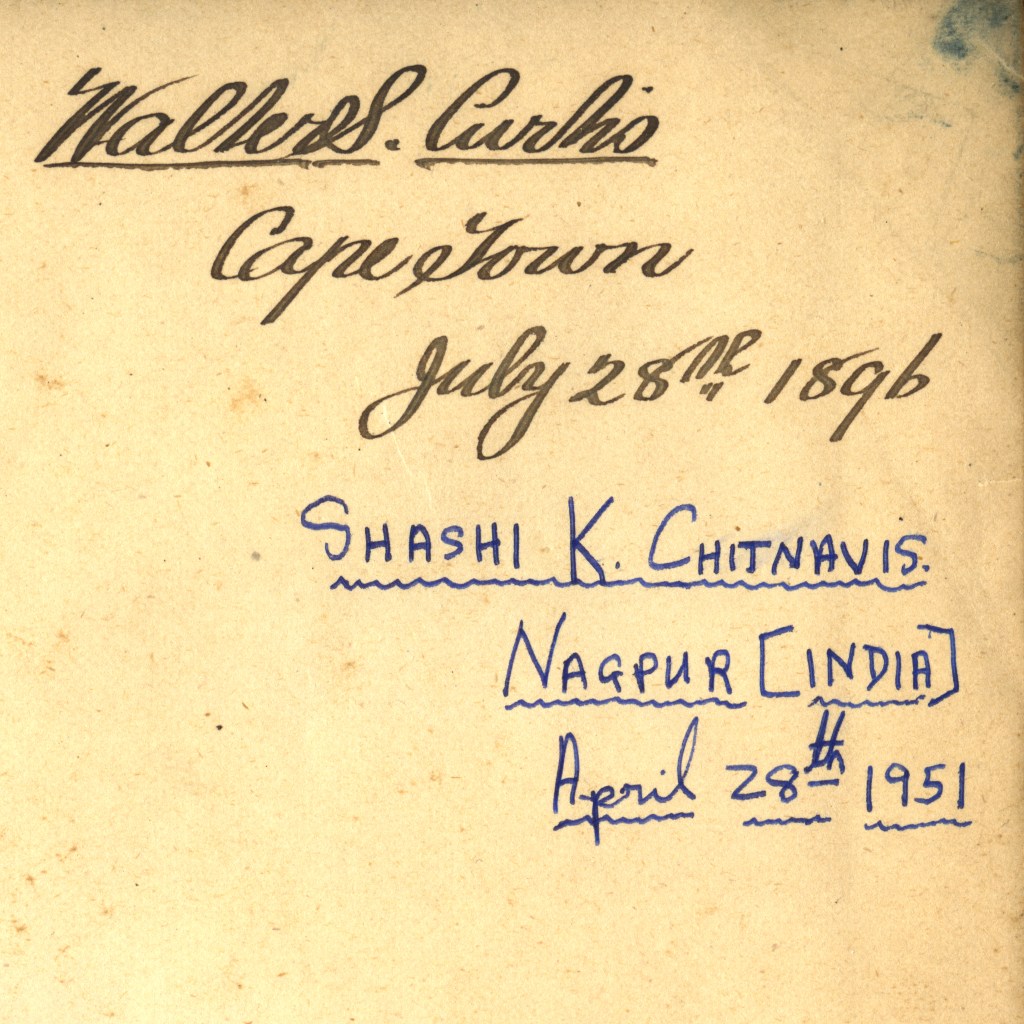
Signatures. The Sportsman’s Handbook to Practical Collecting and Preserving Trophies by Rowland Ward, F.Z.S, 7th Edition, 1894. 
Organized Texts. The Sportsman’s Handbook to Practical Collecting and Preserving Trophies by Rowland Ward, F.Z.S, 7th Edition, 1894. 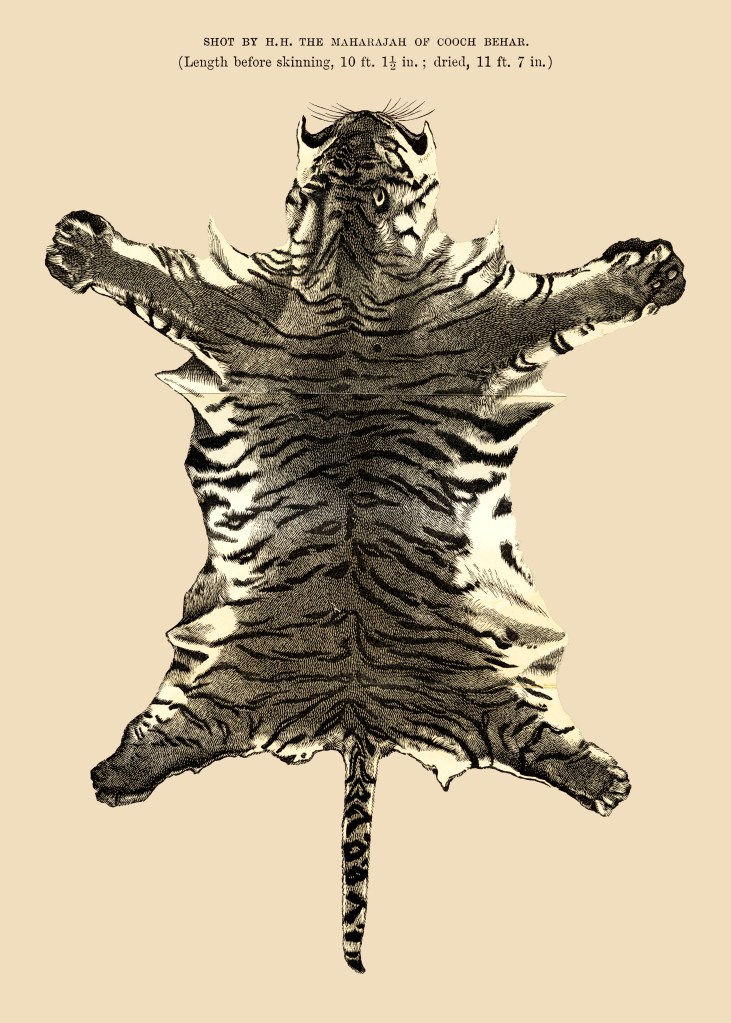
Tiger Taxidermy Foldout. The Sportsman’s Handbook to Practical Collecting and Preserving Trophies by Rowland Ward, F.Z.S, 7th Edition, 1894. 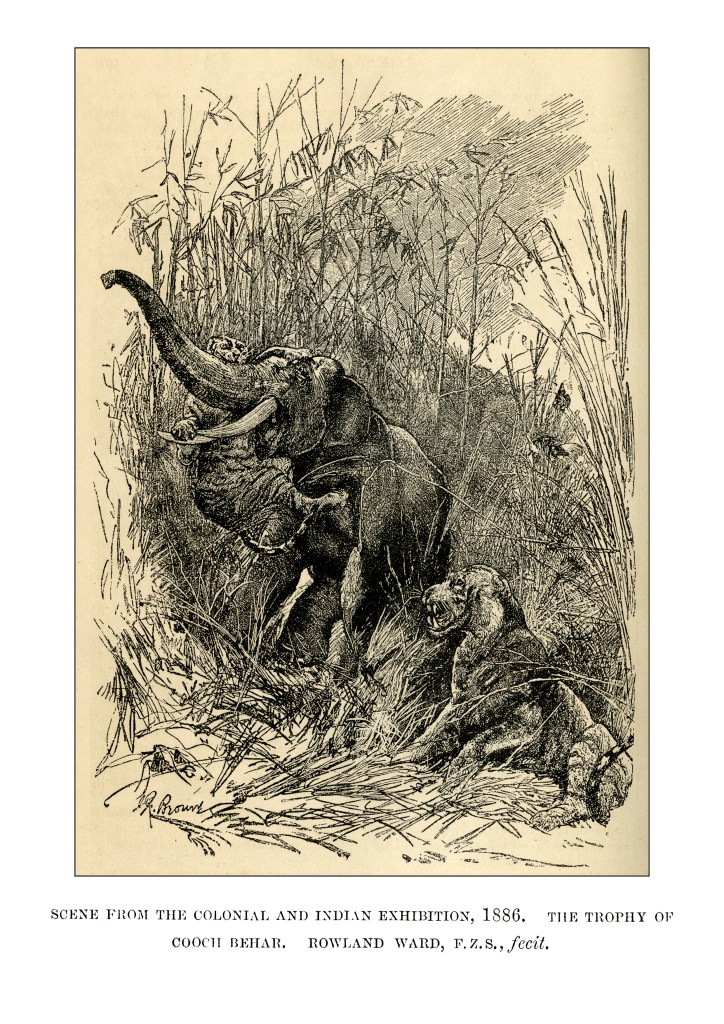
Scene From The Colonial and Indian Exhibition, 1886. The Sportsman’s Handbook to Practical Collecting and Preserving Trophies by Rowland Ward, F.Z.S, 7th Edition, 1894. 
Scene From The Colonial and Indian Exhibition, 1886. The Sportsman’s Handbook to Practical Collecting and Preserving Trophies by Rowland Ward, F.Z.S, 7th Edition, 1894. 
Indian Shikar Notes, 2nd Edition, With special reference to Central Provinces, J.W.Best, 1922. 
Page-1, Indian Shikar Notes, 2nd Edition, With special reference to Central Provinces, J.W.Best, 1922. 
Underline Texts by S.K.Chitnavis from Indian Shikar Notes book. 
Underline Texts by S.K.Chitnavis from Indian Shikar Notes book. 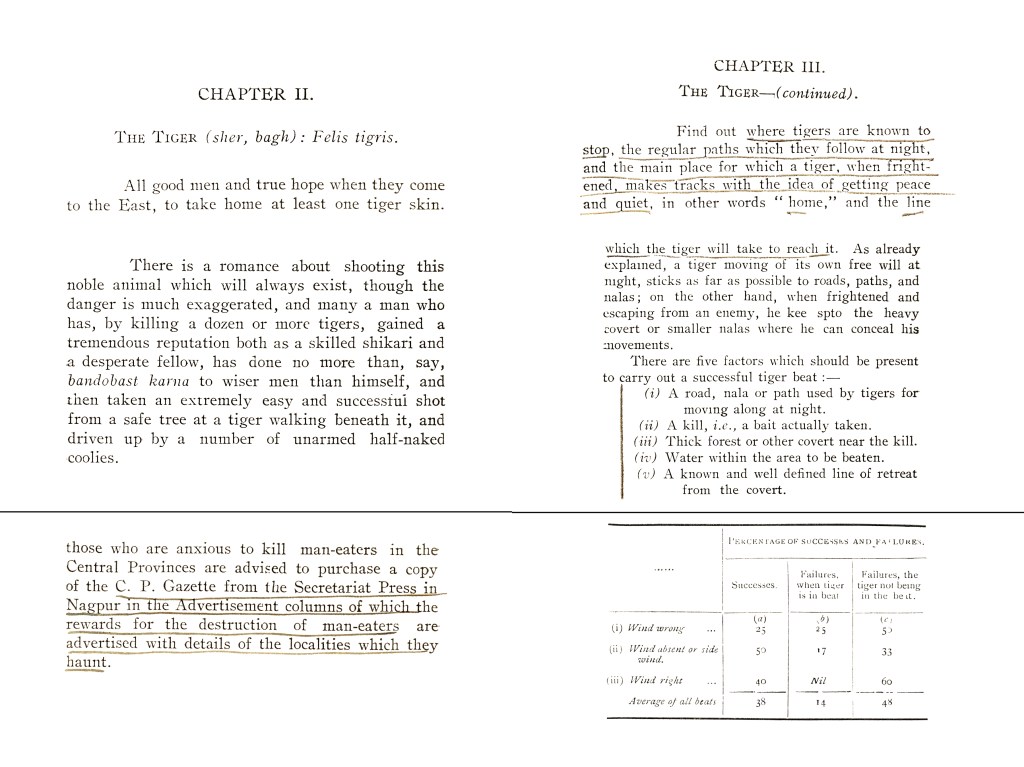
Underline Texts by S.K.Chitnavis from Indian Shikar Notes book. 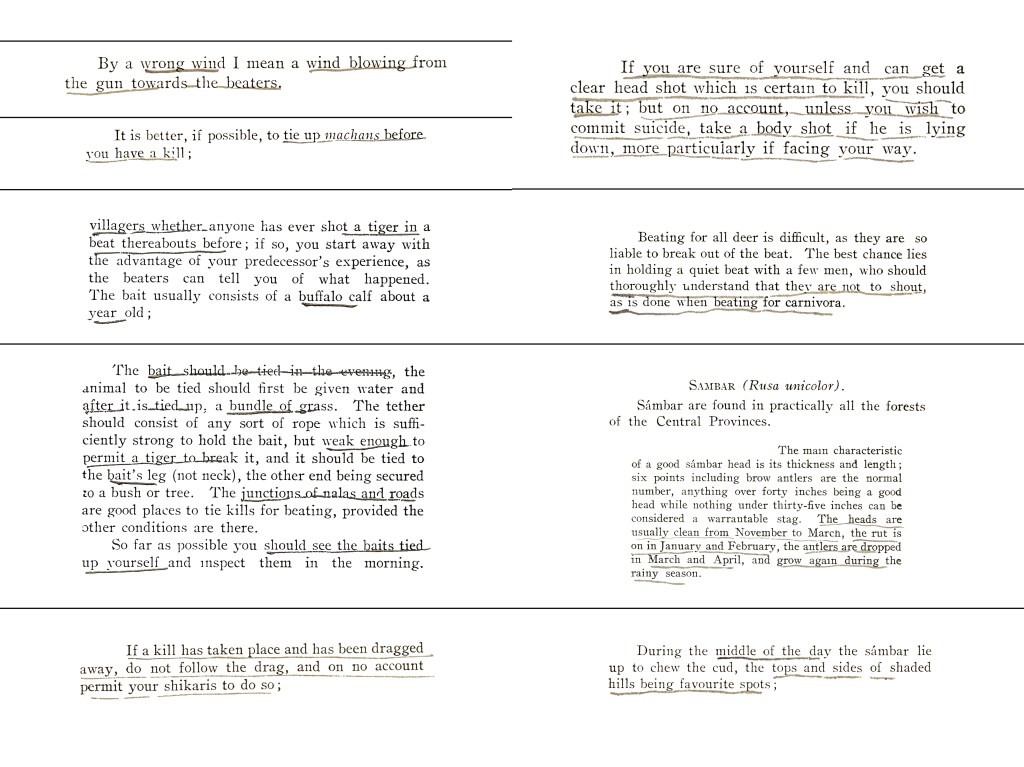
Underline Texts by S.K.Chitnavis from Indian Shikar Notes book. 
Underline Texts by S.K.Chitnavis from Indian Shikar Notes book. 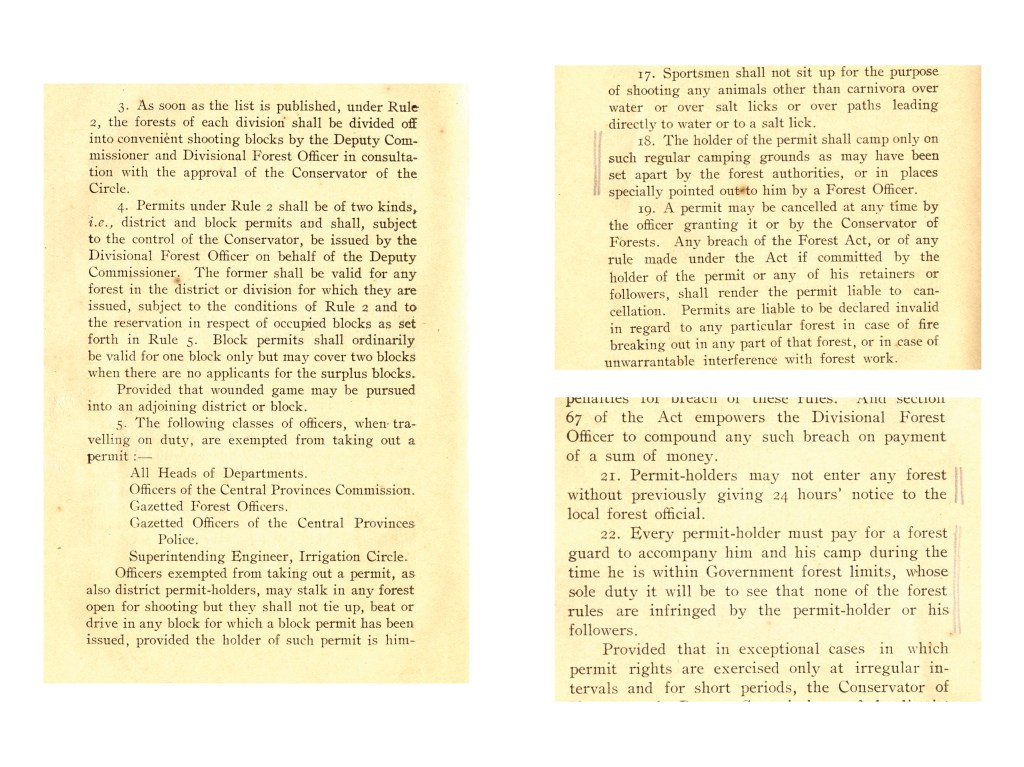
Underline Texts by S.K.Chitnavis from Indian Shikar Notes book. 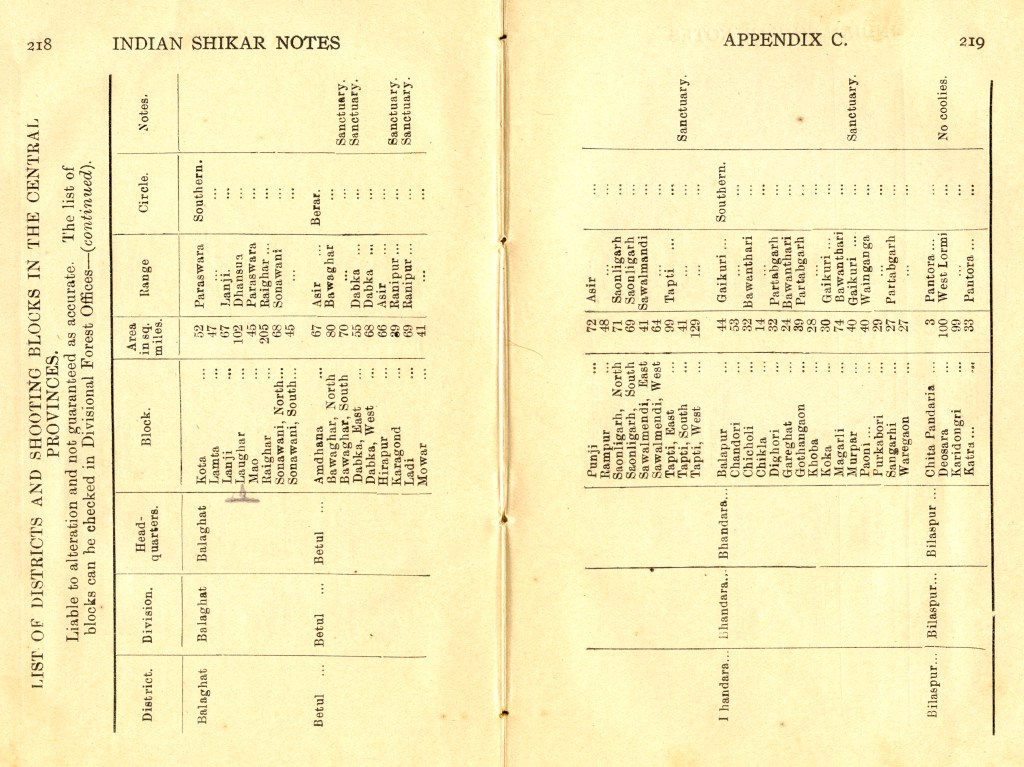
Underline Texts by S.K.Chitnavis from Indian Shikar Notes book. 
Underline Texts by S.K.Chitnavis from Indian Shikar Notes book. 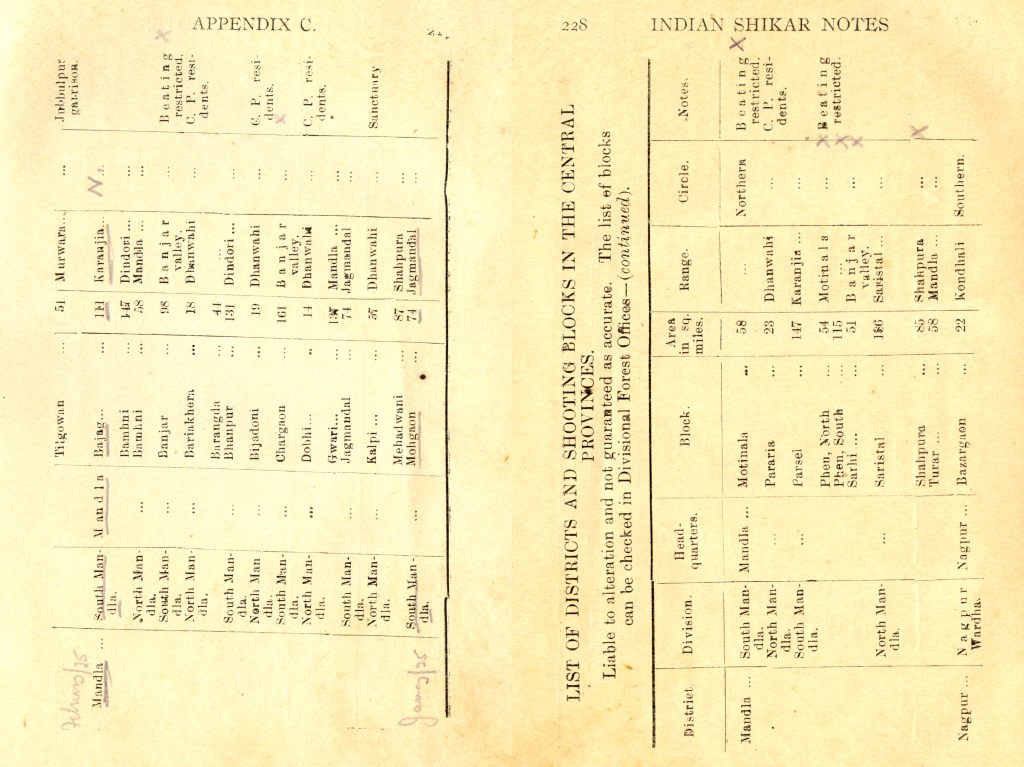
Underline Texts by S.K.Chitnavis from Indian Shikar Notes book.
Personal Archival Photographs and Trophies.

Sloth Bear. (From S.K.Chitnavis collection). 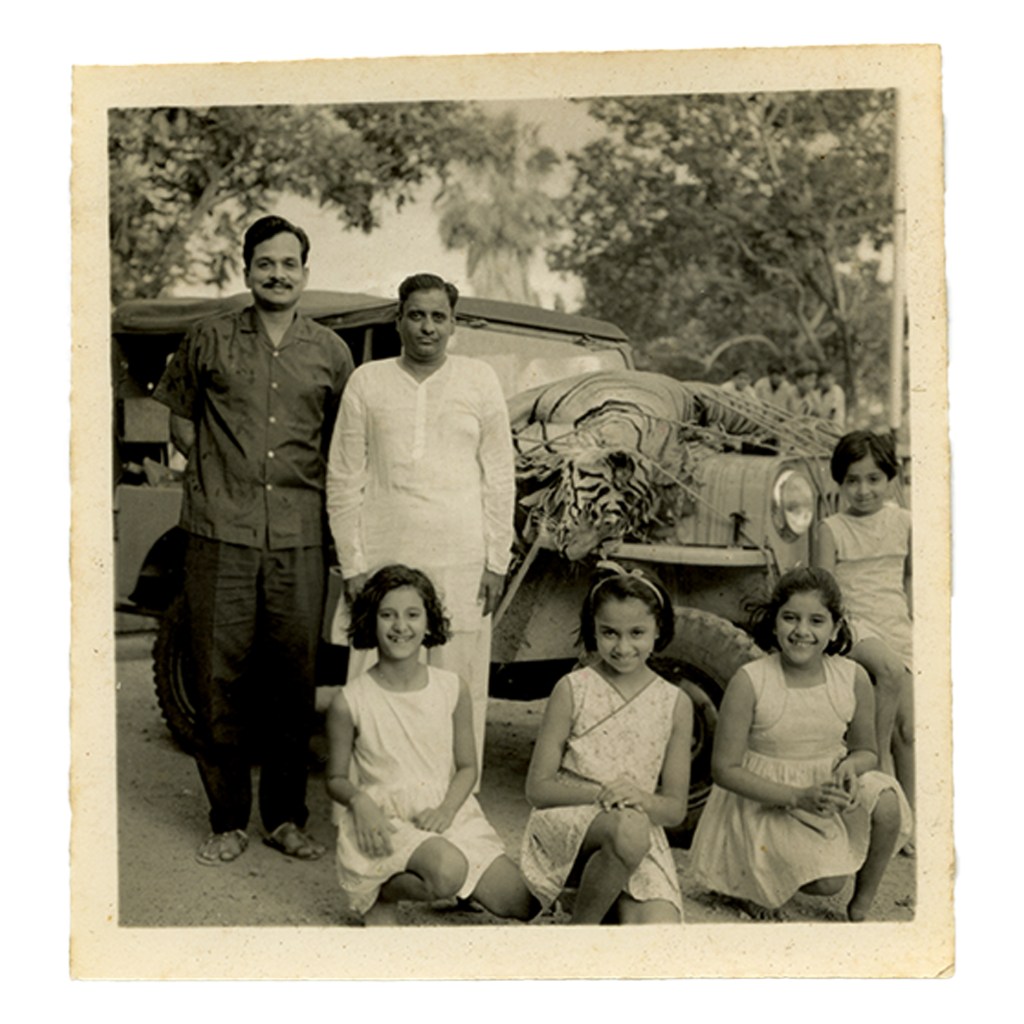
S.K.Chitnavis’s Friends with their children infront of a “trophy”. 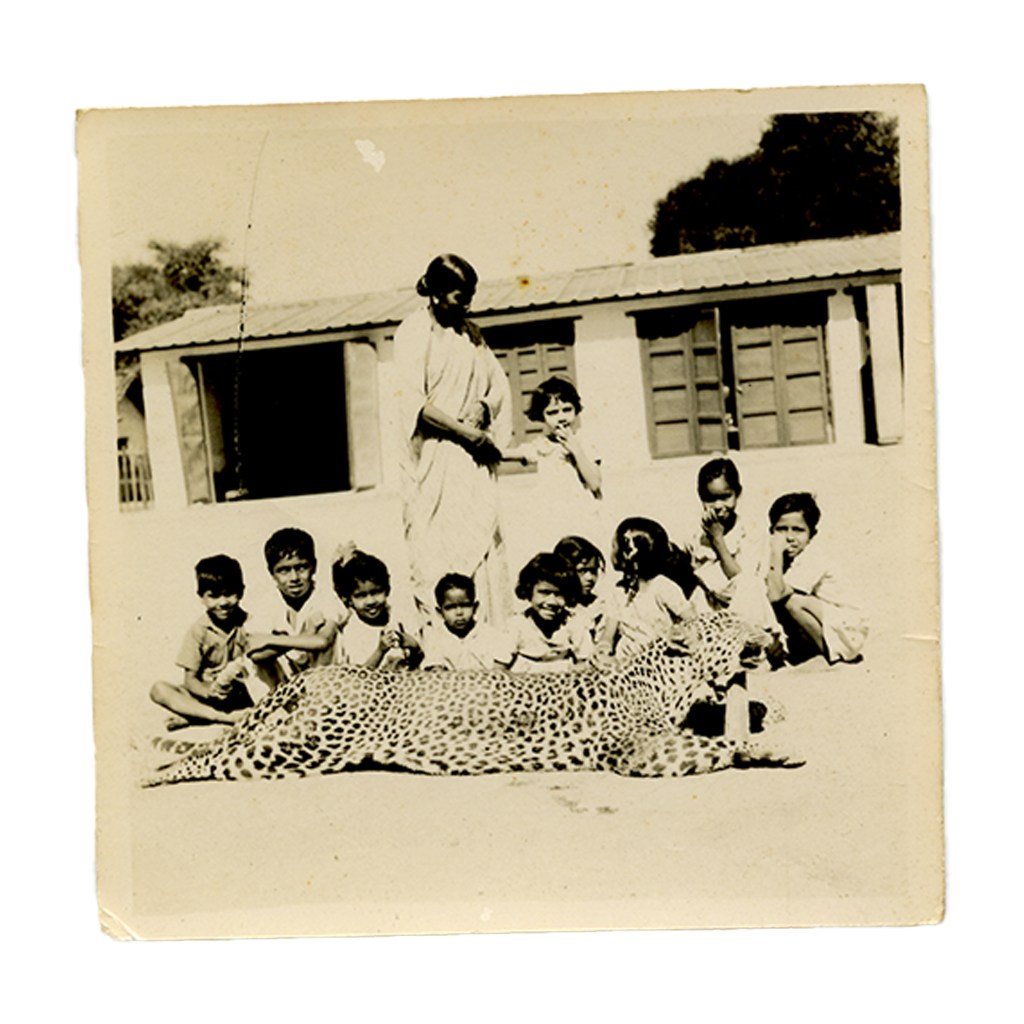
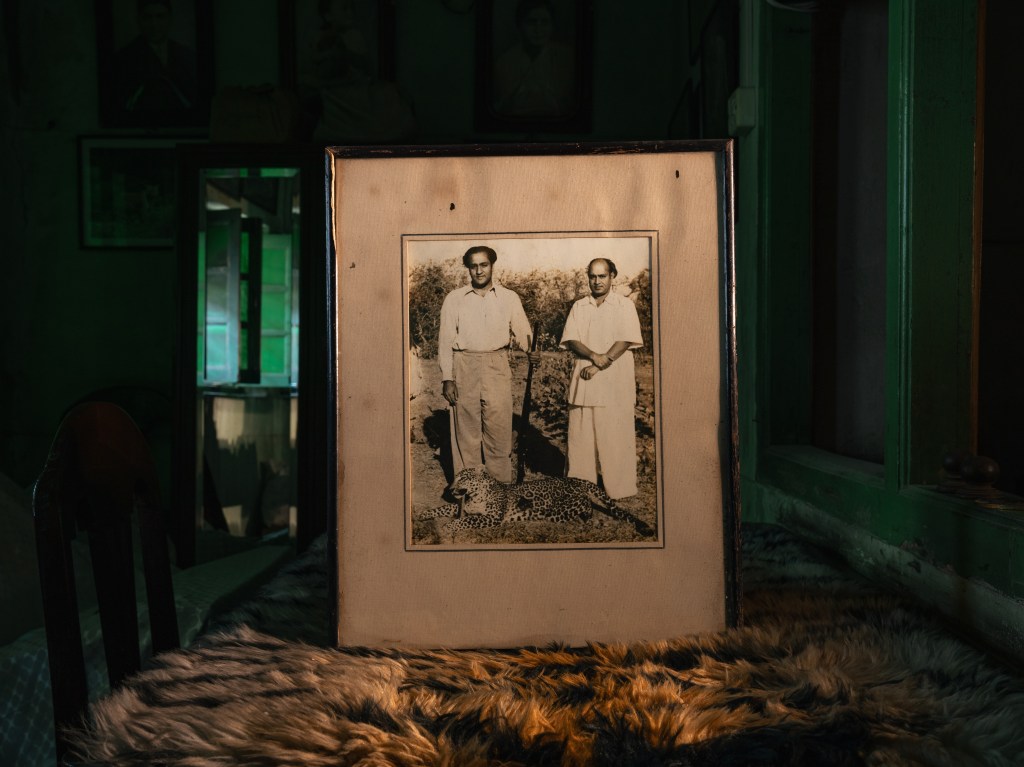
Leopard trophy shot by S.K.Chitnavis. Children sitting behind it for a photograph. 
Mrs. Jayamati Chitnavis. 
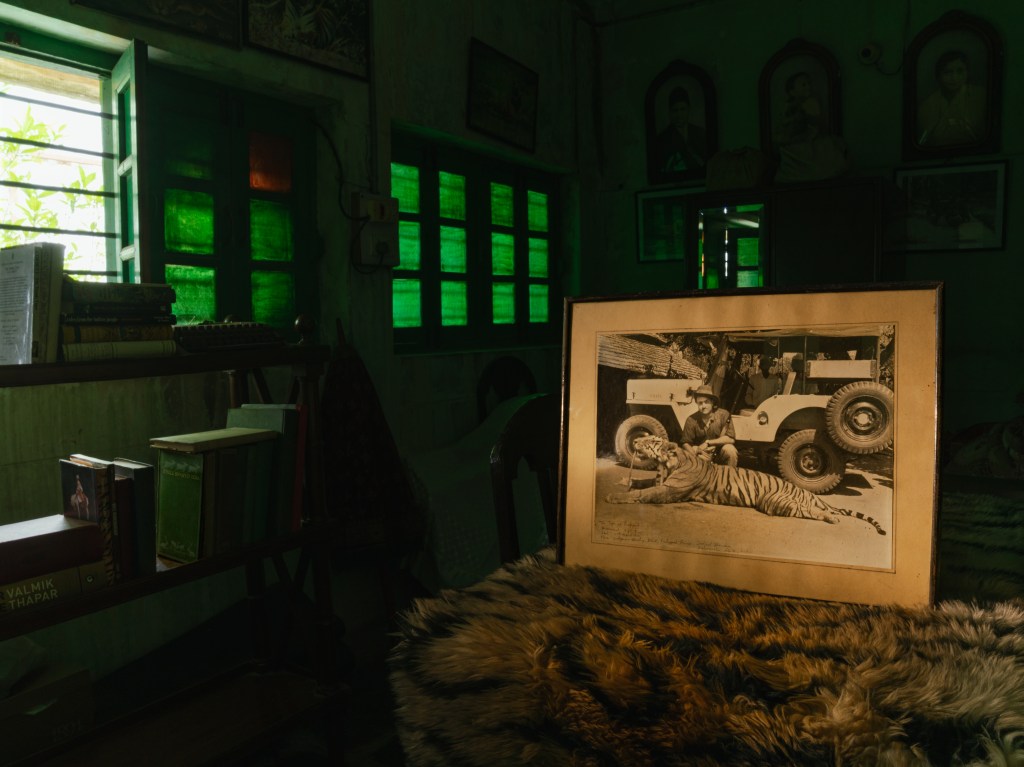
S.K.Chitnavis with his “Shikar”. 
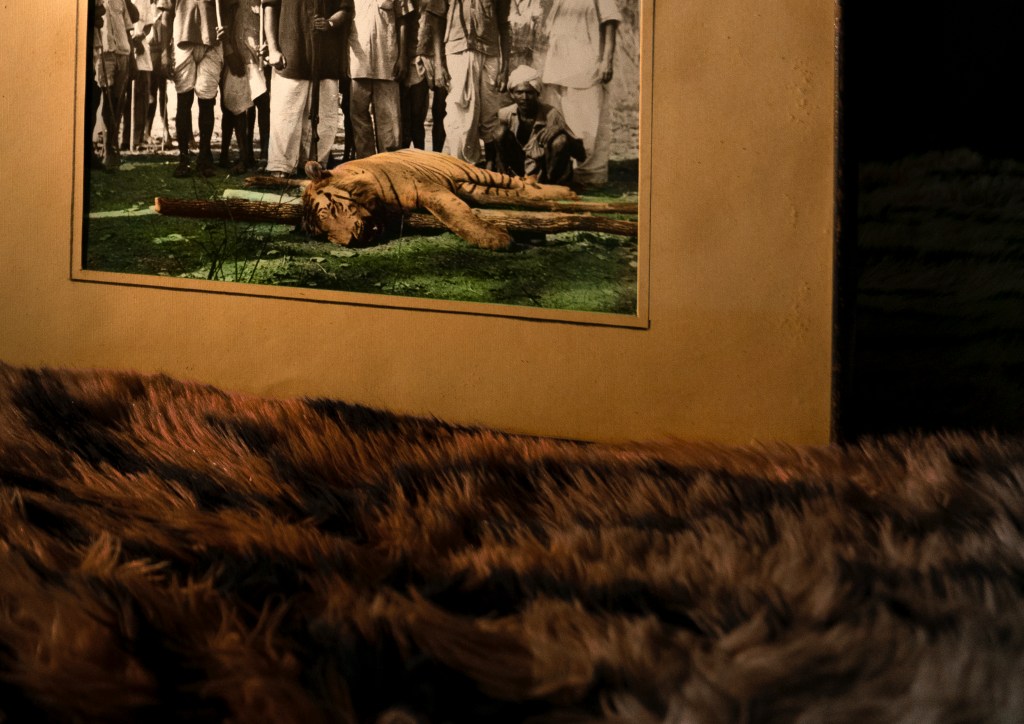
Bearers and villagers standing with S.K.Chitnavis’s trophy. 
Spiritual Guru which S.K.Chitnavis respected at his house. Taxidermies used as decoration. 
Bear Taxidermy used as a ammo storage which was in S.K.Chitnavis’s armoury. (Scan of photograph, 2011) 
Melee Weapons collection in S.K.Chitnavis armoury. (Scanned photographs, 2011) 
Melee Weapons collection in S.K.Chitnavis armoury. (Scanned photographs, 2011) 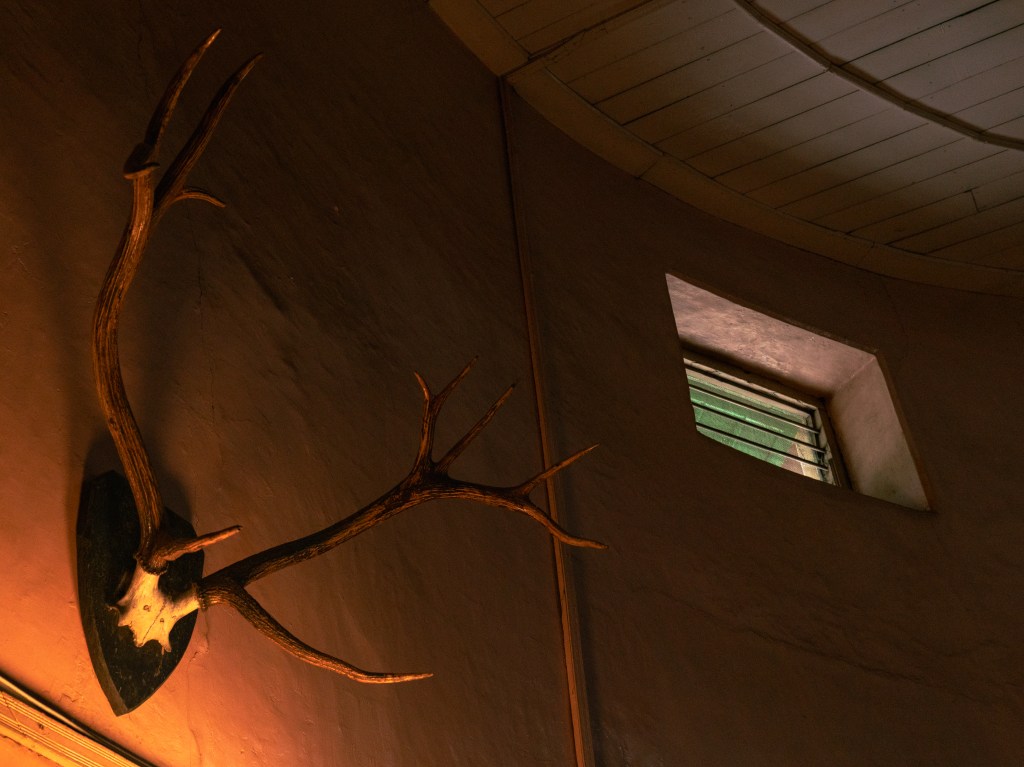
“Barasingha” Swamp Deer Trophy (2024) 
“Vagha” Tiger trophy. (2024) 
“Vagha” Tiger trophy. (2024) 
“Asvala” Sloth Bear Trophy. (2024) 
“Asvala” Sloth Bear Trophy. (2024) 
“Asvala” Sloth Bear Trophy. (2024) 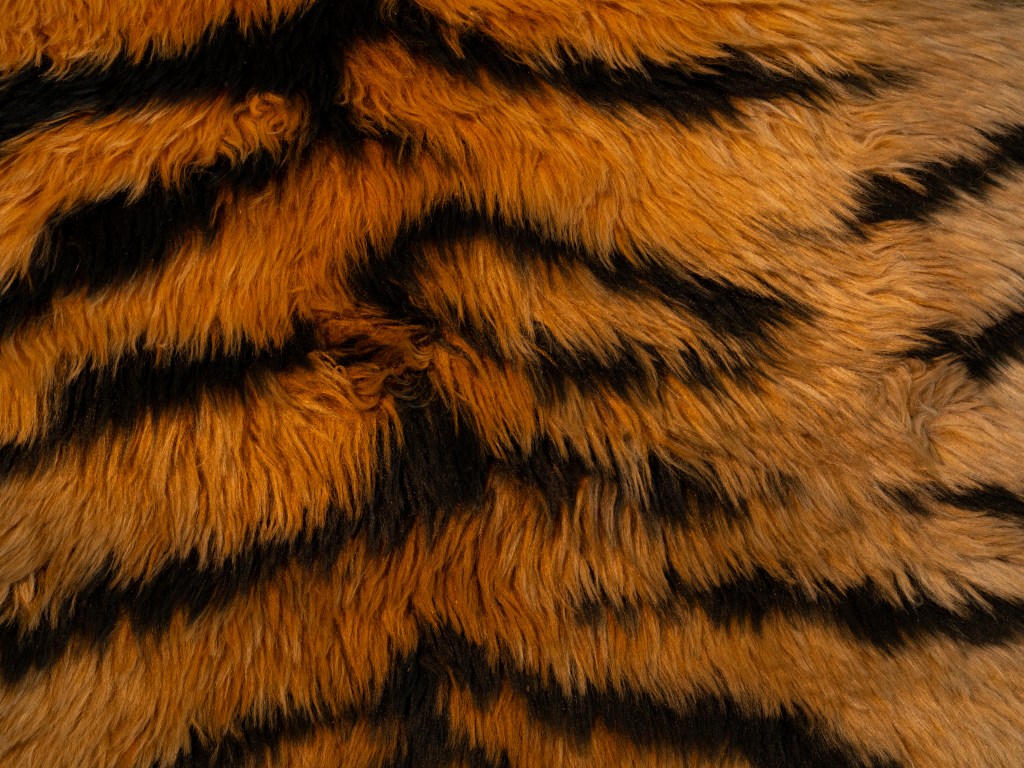
Tiger Fur Rug. (2024) 
S.K.Chitnavis Study Room.
Modern “Machan”.


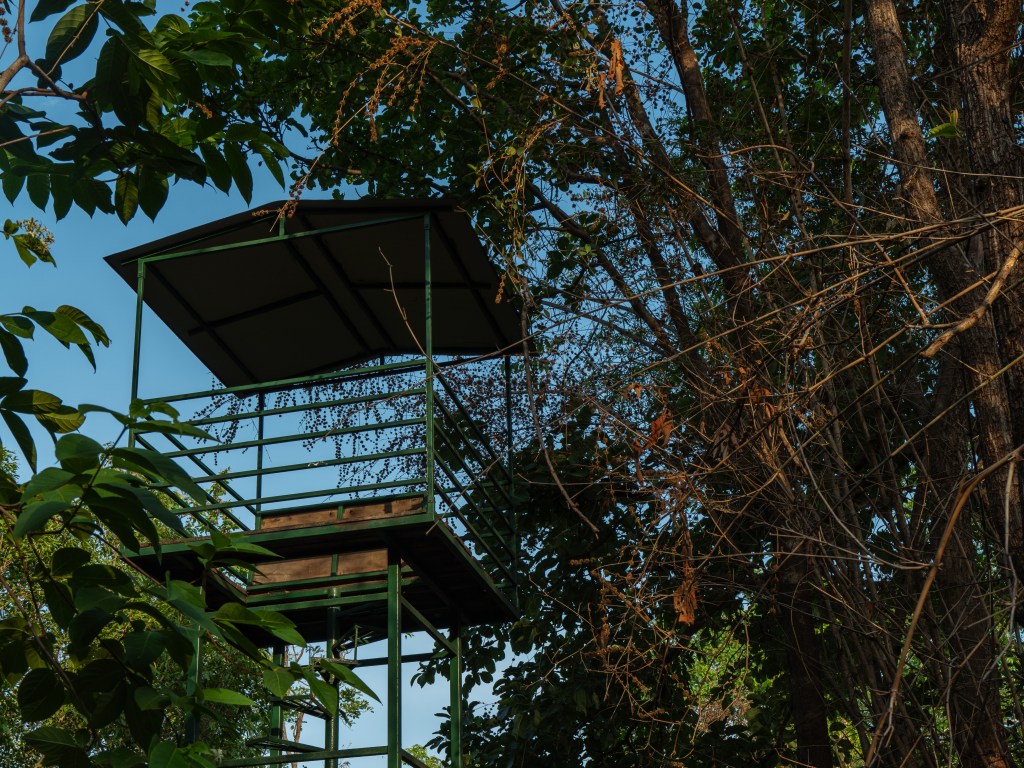
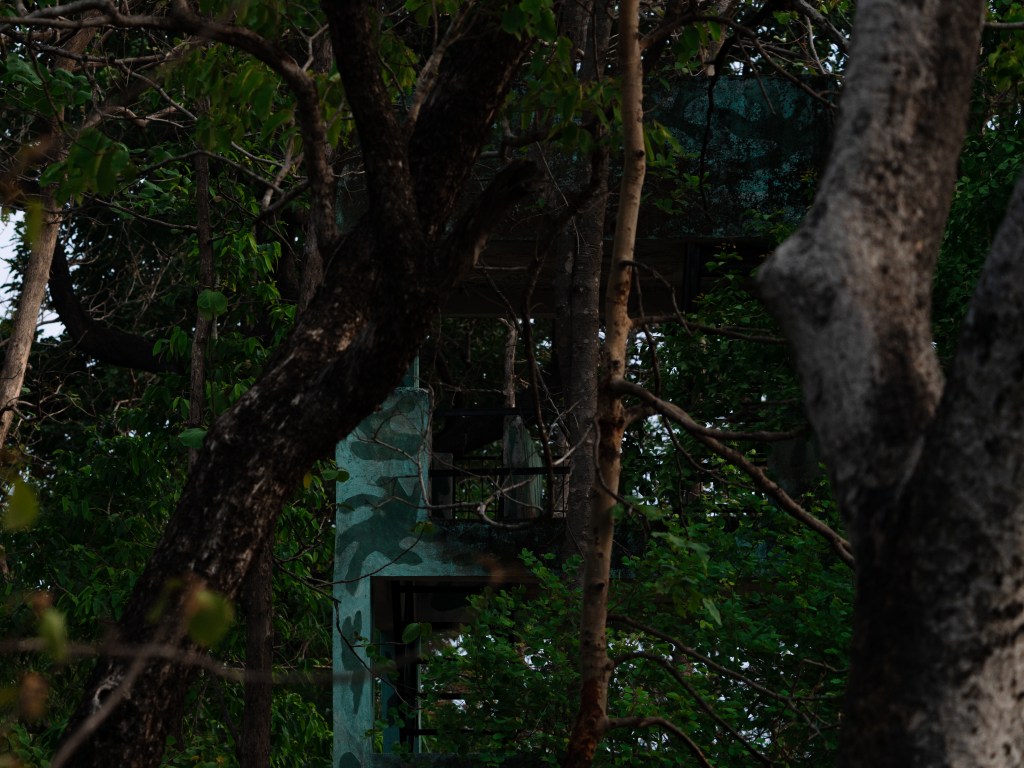

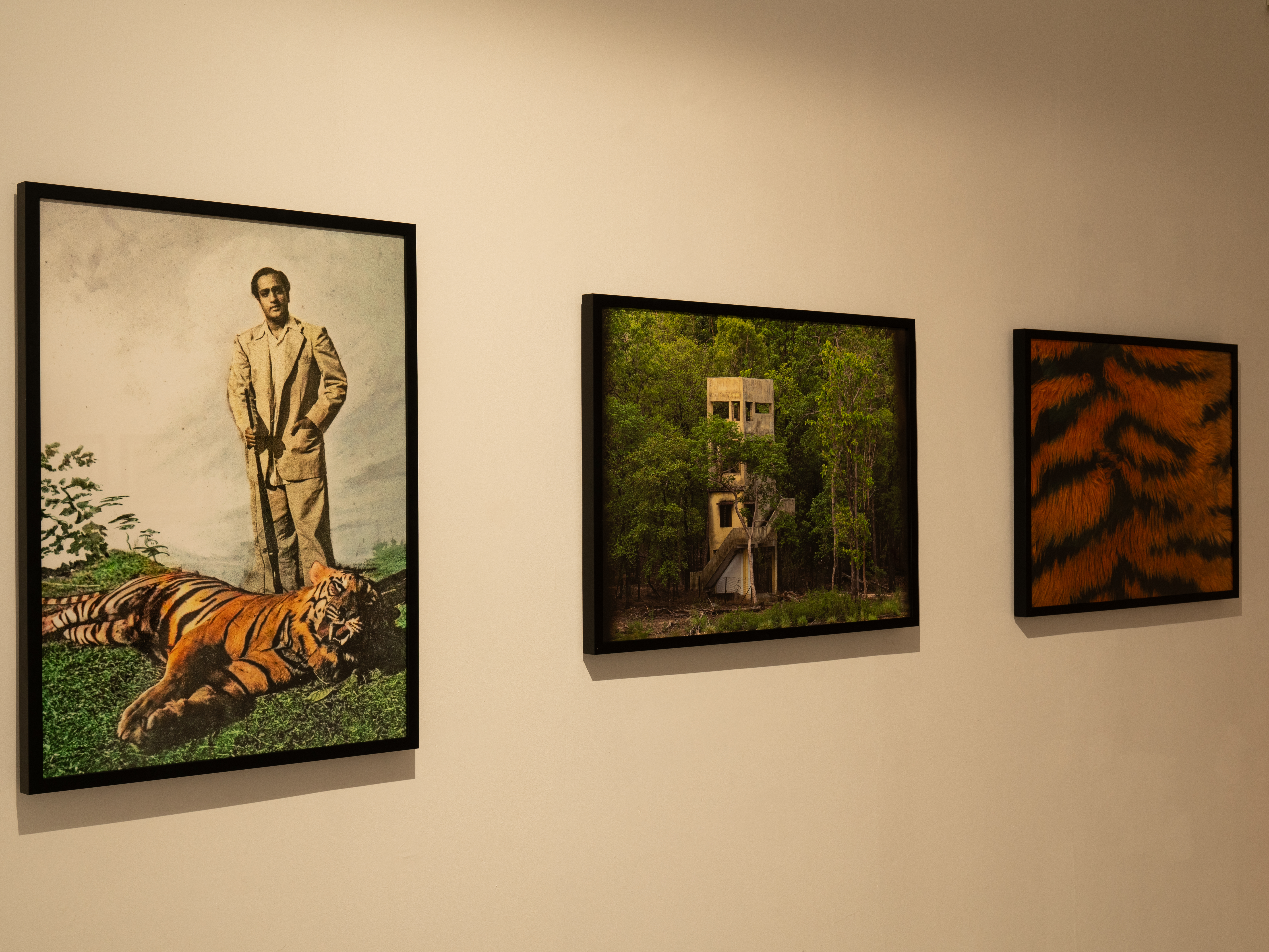
Exhibited Work.
The work was exhibited in The Handbag Factory Gallery, Vauxhall, South London.
23/01/2025 – 03/02/2025


All images copyright © Mrigesh Vikram Inamdar unless credited otherwise.
 Mrigesh V Inamdar